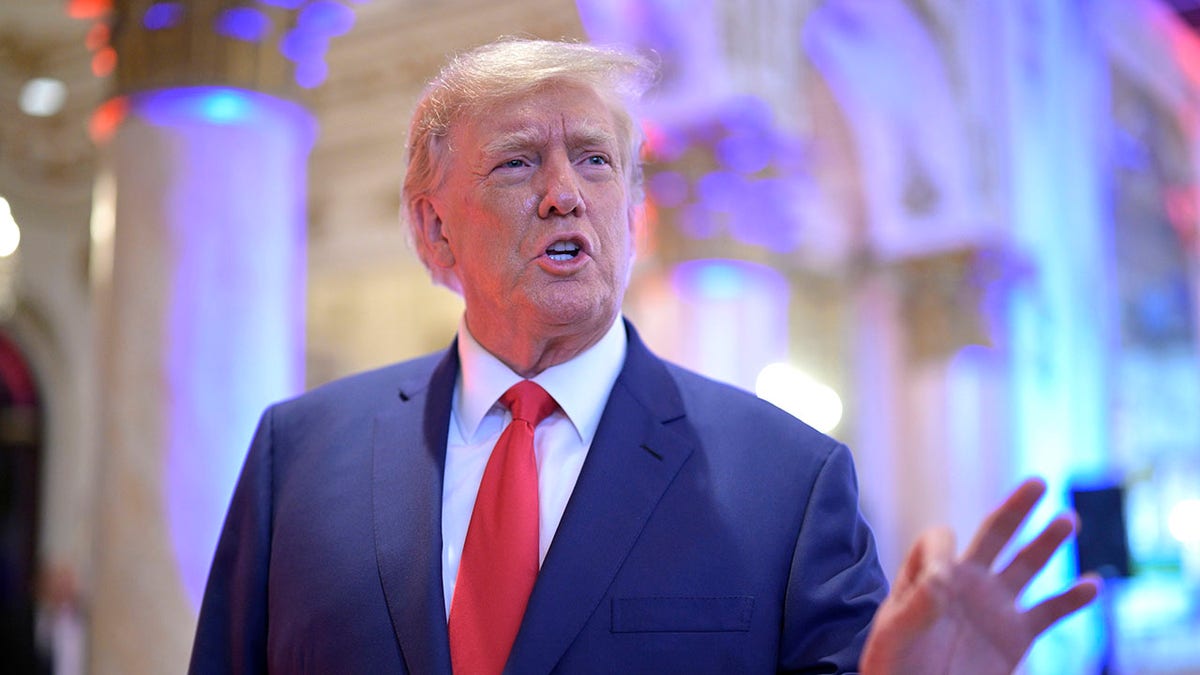
Donald Trump didn’t hold back when a 60 Minutes reporter asked whether he bore any responsibility for the rhetoric that may have influenced the man behind the recent assassination attempt. The moment—tense, unscripted, and politically loaded—showed just how sharply the former president draws the line between accountability and what he calls media persecution.
The interview, conducted in the aftermath of a shooting at one of his rallies, quickly veered into contentious territory when correspondent Scott Pelley referenced a manifesto allegedly written by the shooter. While authorities have not confirmed the authenticity or full contents of the document, media outlets, including 60 Minutes, reported that it contained references to political extremism and criticism of Trump.
When Pelley asked if Trump felt any obligation to reflect on whether his language might contribute to such violence, the former president erupted.
The Flashpoint: A Manifesto and a Microphone
The question wasn’t entirely unexpected. In the wake of politically charged violence, journalists routinely examine the cultural and rhetorical environment that may have contributed to it. But for Trump, it crossed a line.
“I’m not responsible for the deranged minds of people who write fake manifestos,” Trump shot back, his tone rising. “What I’m responsible for is standing up for millions of hardworking Americans who are tired of being disrespected.”
The alleged manifesto, which surfaced online after the shooting, reportedly criticized both political extremes but included strong anti-Trump sentiments. Some analysts argue it contradicted early speculation that the shooter was motivated by right-wing ideology. Yet, the media narrative quickly shifted toward broader questions about political rhetoric—specifically, Trump’s history of combative language.
60 Minutes didn’t present definitive proof linking the manifesto to the shooter’s motives. Instead, it posed a preventative question: Should political leaders consider the impact of their words, even if indirectly?
To Trump, that was enough to trigger a broader condemnation of the media.
Trump’s Pattern of Media Confrontation
This exchange fits a well-established pattern. Throughout his presidency and since, Trump has routinely dismissed critical journalism as “fake news,” “enemy of the people,” or politically orchestrated attacks. His relationship with 60 Minutes, in particular, has been strained.
Past interviews have ended with Trump cutting off reporters, disputing facts in real time, or later attacking the segment on social media. The latest incident is no exception.
What makes this confrontation different is timing. It occurred during a fragile period—just weeks after an attempted assassination that left one spectator dead and two others injured. The Secret Service is investigating, and the nation is still processing the trauma.
Yet Trump used the 60 Minutes platform not to mourn or unify, but to double down.
“They don’t care about the victim. They don’t care about the family. All they care about is trying to blame me,” Trump said during the interview.
He accused CBS of trying to “destabilize the election” and amplify “false narratives.” He claimed the manifesto was either fabricated or misrepresented—a common tactic when faced with unflattering associations.
The Media’s Dilemma: Accountability vs. Sensationalism
60 Minutes has long prided itself on hard-hitting, investigative journalism. But in polarized times, even responsible reporting can be interpreted as bias.
Asking whether political rhetoric contributes to violence isn’t new. After Gabrielle Giffords was shot in 2011, media outlets examined Sarah Palin’s “target” map. After the 2018 Pittsburgh synagogue shooting, reporters scrutinized anti-immigrant language from the White House.
But the 60 Minutes team walked a tightrope: How do you address potential radicalization without fueling conspiracy theories or unfairly implicating a public figure?
Their approach—grounded in open-ended inquiry rather than accusation—was measured. Pelley didn’t claim Trump caused the shooting. He simply asked whether Trump saw any connection worth reflecting on.
That nuance was lost in the backlash.
Trump’s campaign quickly released a statement calling the question “disgusting” and “an insult to the victims.” Conservative media echoed the sentiment, framing the interview as another example of liberal media bullying.
Meanwhile, independent press analysts were divided. Some defended 60 Minutes for doing its job. Others questioned whether the timing was appropriate, given the ongoing investigation.
The Manifesto: What We Know (And Don’t Know)
One of the most volatile aspects of this controversy is the shaky foundation of the manifesto itself.
Law enforcement has not confirmed: - Whether the document was written by the shooter - Whether it was authored by someone else and falsely attributed - Whether it was ever completed or published before the attack
Digital forensics are still underway. Experts caution that manifestos—especially in the digital age—are often hoaxes, exaggerations, or post-event fabrications designed to manipulate public perception.
Yet media outlets, including 60 Minutes, cited online posts and PDFs circulated within extremist forums. Some of these materials referenced Trump in negative terms, but also criticized woke culture, Big Tech, and globalism—ideological touchpoints that don’t fit neatly into left-right binaries.
Even if the manifesto is authentic, linking it to motive requires more than superficial references. Criminal investigations look at behavior, communications, and digital footprints—not just anonymous rants.
But in the court of public opinion, the mere mention of a “manifesto” can be enough to spark outrage.
Trump seized on this ambiguity.
“You can’t let people write some crazy thing online and then blame me,” he said. “Next, they’ll say Shakespeare caused a murder because someone once quoted him.”
The Rhetoric Ripple Effect
Regardless of the manifesto’s validity, the deeper issue persists: Does political language matter?
Studies in political psychology suggest that repeated exposure to dehumanizing rhetoric—calling opponents “vermin,” “traitors,” or “enemies of the people”—can erode social norms and normalize violence.
A 2023 study from the University of Pennsylvania found that audiences exposed to inflammatory political speech were 34% more likely to justify violent responses to political opponents.
Trump’s rhetoric has long pushed these boundaries. Phrases like “Lock her up,” “Build the wall,” and “Stop the steal” energized his base but also blurred the line between protest and threat.
After the January 6 Capitol riot, multiple investigations highlighted how such language can mobilize extremist behavior—even without direct incitement.
So when 60 Minutes asked Trump to reflect on this, they weren’t accusing him of pulling the trigger. They were asking whether he sees a role in shaping the climate in which such acts become thinkable.

His refusal to entertain the question may say more than any manifesto ever could.
Political Strategy or Sincere Outrage?
It’s worth considering the tactical dimension of Trump’s response.
By attacking 60 Minutes, he reframed the narrative. Instead of a conversation about safety, rhetoric, and unity, it became about media bias and victimization.
This is a familiar playbook. When facing scrutiny, Trump often shifts focus by accusing the messenger of corruption. It rallies his base, dominates news cycles, and deflects accountability.
In this case, the strategy worked.
Within hours of the interview airing, #Cancel60Minutes and #ProtectThePresident trended on social media. Right-wing influencers amplified clips of Trump’s rebuttal, calling Pelley “biased” and “out of line.”
Meanwhile, the broader discussion about preventing political violence was sidelined.
Is this outrage genuine? Perhaps. Trump has spoken emotionally about the trauma of nearly being assassinated. He’s described the sound of the bullet, the confusion, the fear.
But he has also used that trauma as a political tool—warning of a “bloodbath” if he’s not re-elected and claiming the attack was “planned” to stop his campaign.
The line between personal pain and political theatrics is thin. And in moments like this, it often disappears altogether.
What This Means for Political Discourse
The clash between Trump and 60 Minutes isn’t just about one interview. It’s a symptom of a deeper fracture in American public life.
On one side: journalists trying to fulfill their watchdog role, asking difficult questions in service of public safety.
On the other: a political figure who sees such questions as personal attacks, weaponized by enemies.
When accountability is interpreted as persecution, dialogue breaks down. When every inquiry is met with deflection, trust erodes.
This isn’t about protecting Trump or 60 Minutes. It’s about preserving the space for honest conversation—especially when lives are at stake.
We don’t need to assign guilt to ask better questions. We don’t need to prove causation to examine influence.
The goal isn’t to silence leaders or media. It’s to create a culture where both can operate with integrity, even under pressure.
A Path Forward: Responsibility Without Surrender So where do we go from here?
Leaders should be able to speak forcefully about their beliefs without inciting violence. The media should be able to question rhetoric without being accused of treason.
That balance requires nuance—something often lost in headlines and viral clips.
Here’s what responsible discourse could look like:
- For politicians: Acknowledge that words have weight. Avoid dehumanizing language. Condemn violence unambiguously—even when committed by opponents’ supporters.
- For media: Focus on verified facts. Distinguish between speculation and evidence. Avoid sensationalizing unconfirmed documents.
- For the public: Demand better. Reject both inflammatory rhetoric and unfair blame. Support journalism that seeks truth, not clicks.
Trump’s anger at 60 Minutes may be understandable. But his refusal to engage with the underlying issue is dangerous.
Democracy doesn’t die with a bullet. It erodes with every avoided conversation, every deflection, every time we choose outrage over reflection.
The manifesto may be disputed. The shooter’s motives may never be fully known. But one thing is clear: we can’t afford to keep ignoring the power of words.
Act accordingly.
FAQ
What should you look for in Trump Slams 60 Minutes Over Manifesto Question? Focus on relevance, practical value, and how well the solution matches real user intent.
Is Trump Slams 60 Minutes Over Manifesto Question suitable for beginners? That depends on the workflow, but a clear step-by-step approach usually makes it easier to start.
How do you compare options around Trump Slams 60 Minutes Over Manifesto Question? Compare features, trust signals, limitations, pricing, and ease of implementation.
What mistakes should you avoid? Avoid generic choices, weak validation, and decisions based only on marketing claims.
What is the next best step? Shortlist the most relevant options, validate them quickly, and refine from real-world results.