Workers servicing machinery shouldn’t gamble with their lives. Yet, every year, preventable injuries and fatalities occur because energy sources aren’t properly controlled. The root cause? Inconsistent or poorly executed lockout tagout (LOTO) procedures. At the heart of an effective LOTO program are two critical components: lockout tagout boards and locks. These aren’t just compliance checkboxes—they’re frontline defenses that organize, communicate, and physically secure hazardous energy.
When implemented correctly, LOTO boards and locks transform chaotic maintenance workflows into structured, safe operations. They act as visual command centers and mechanical barriers, ensuring that machines stay de-energized until work is complete. But too often, facilities use outdated boards, mismatched locks, or poorly designed systems that undermine the entire process.
This is where strategy meets hardware. Choosing the right LOTO boards and locks isn’t about buying the most expensive option—it’s about matching the solution to your facility’s scale, workflow, and risk profile.
Why Lockout Tagout Boards Are More Than Just Storage
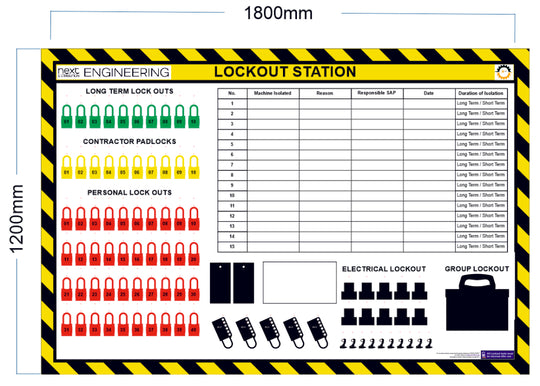
Lockout tagout boards are the nerve centers of energy control. They’re not merely places to hang locks—they’re designed to standardize procedures, reduce human error, and provide accountability.
A well-organized LOTO board typically includes: - Dedicated slots for individual employee locks - Clear labeling for equipment-specific procedures - Storage for tags, hasps, valve locks, and other accessories - Checklists or laminated LOTO steps for quick reference
Without a board, workers may improvise—leaving locks in lockers, using personal bags, or bypassing steps altogether. This creates gaps in the safety chain.
Real-World Example: At a Midwest manufacturing plant, maintenance delays spiked due to missing locks and unclear responsibility. After installing centralized LOTO boards with assigned lock stations per machine, incident reports dropped 62% in six months. The board didn’t just store locks—it enforced discipline.
Boards also support team-based lockout scenarios. When multiple workers service a single machine, each applies their personal lock. The board ensures everyone is accounted for before restart. If one worker forgets to remove their lock during turnaround, it’s immediately visible—stopping a potentially catastrophic startup.
The Role of Locks in Isolating Hazardous Energy
Locks are the physical enforcement mechanism of LOTO. A tag may warn, but a lock prevents. That’s why lock selection matters as much as procedure.
Not all locks are created equal. Industrial environments demand: - Non-conductive bodies (for electrical safety) - Corrosion-resistant materials (stainless steel, brass) - Unique key coding or keyed-alike systems - Shackle lengths and diameters suited to specific energy isolation points
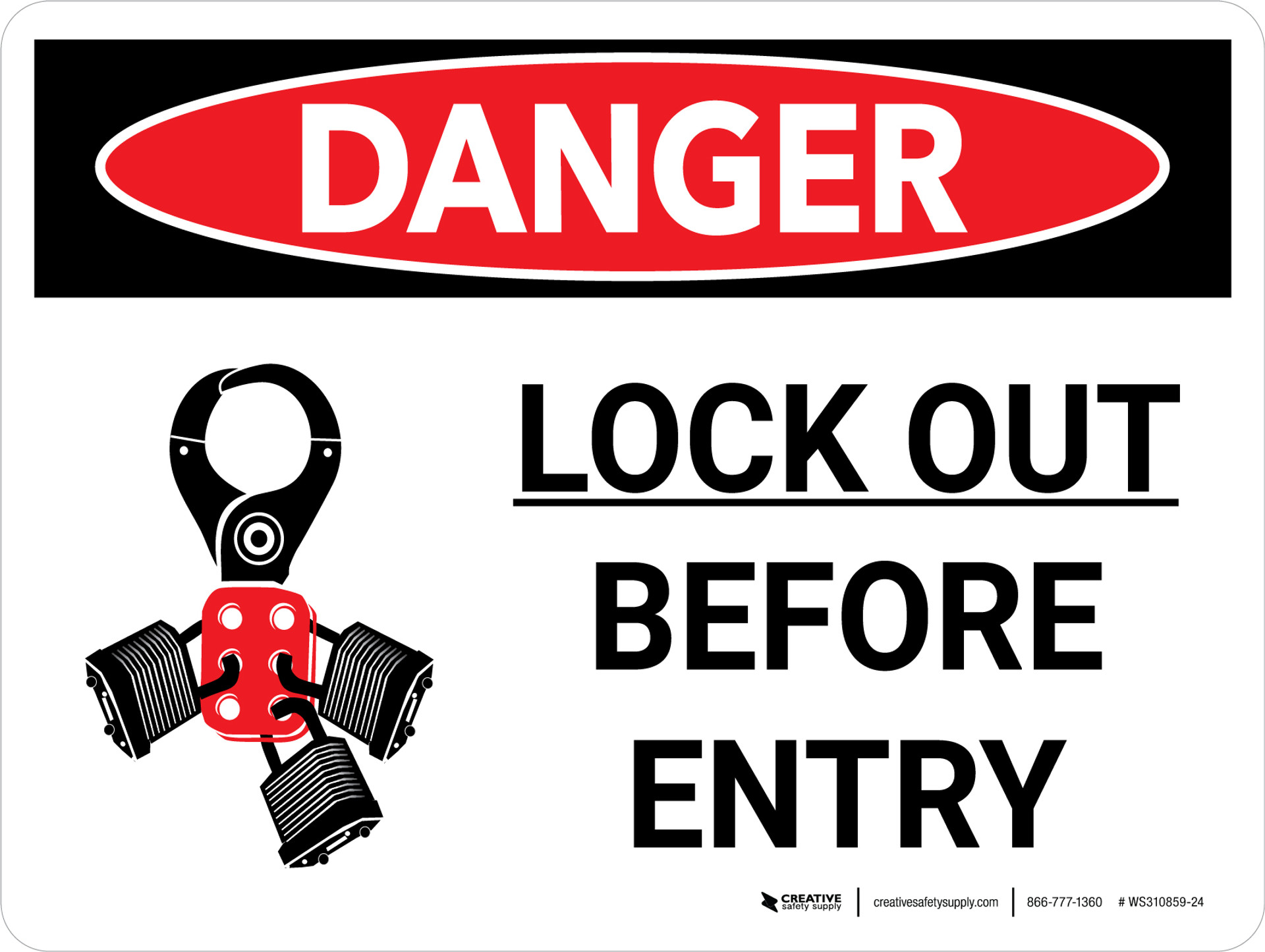
Common mistake: Using standard padlocks on breakers or valves. These often don’t fit properly, leading to forced installation or workarounds that compromise safety.
Practical Tip: Use color-coded locks to differentiate roles. Red for maintenance, blue for operations, green for contractors. This visual cue speeds up verification and reduces confusion during shift changes.
Also, consider dual-lock hasps. These allow multiple workers to apply their locks to a single isolation point—critical for group lockout. The machine can’t restart until every lock is removed, ensuring no one is left behind.
Choosing the Right Lockout Tagout Board for Your Facility
Selecting a LOTO board isn’t a one-size-fits-all decision. It depends on your operation’s size, complexity, and frequency of maintenance.
#### Small Facilities (1–10 Isolation Points) A compact wall-mounted board with 5–10 lock stations and basic accessory pockets may suffice. Magnetic or pegboard styles work well here.
#### Mid-Sized Operations (10–50 Points) Go for modular boards with labeled sections per machine or department. Include space for procedure cards and digital QR codes linking to LOTO instructions.
#### Large Industrial Sites (50+ Points) Consider mobile lockout carts or digital lockout stations. These can include biometric login, lock tracking, and audit trails—essential for compliance reporting.
Common Pitfall: Overloading a board. Crowded boards lead to misplacement and skipped steps. If a board is full, workers might skip logging their lock, defeating the purpose.
Use a capacity buffer—design boards to handle 20% more than current need. This accounts for growth and temporary contractors.
Top 5 Lockout Tagout Board and Lock Systems
Below are five industry-proven LOTO solutions, balancing durability, usability, and scalability.
| Product | Key Features | Best For |
|---|---|---|
| Grace Industries LOTO Station 6000 | 24 lock stations, weather-resistant, magnetic back | Mid-sized manufacturing |
| Saf-T-Cot Universal Lockout Board | Modular design, customizable inserts, bilingual tags | Facilities with multilingual teams |
| Seton Heavy-Duty Steel LOTO Cart | Mobile cart with lock drawers, built-in checklist | Large plants with decentralized maintenance |
| Master Lock 1400DAT Digital Lockout Station | Cloud-connected, user login, activity logging | High-compliance environments |
| Justrite 20-Lock Wall Station | Affordable, quick install, ANSI-compliant labels | Small workshops and warehouses |
Each of these systems pairs with high-quality locks—like Master Lock’s 1500iID or Brady’s BTL2P—offering keyed-alike or keyed-different options based on access control needs.
Digital systems, while pricier, offer traceability. In the event of an incident, you can audit who applied a lock, when, and for how long. This level of detail is increasingly valuable for OSHA audits and insurance reviews.
How Tags Complement Locks—And Where They Fall Short

Tags are the communication half of LOTO. They include: - Worker name - Department - Date and time of lock application - Reason for lockout
But tags alone aren’t protection. A determined or unaware operator can remove a tag and restart equipment. That’s why OSHA requires both lock and tag in nearly all cases.
Limitation: Tags degrade. Faded, torn, or missing tags create ambiguity. Use laminated or weatherproof tags in harsh environments.
Also, avoid generic tags. “Do Not Operate” without context is weak. Strong tags say: “Valve Isolation – Pump 3 Maintenance – Jane Doe, Maintenance – 8:15 AM.”
Pair tags with lockout hasps, valve locks, and circuit breaker covers to ensure physical barriers exist at every energy point.
Common LOTO Mistakes That Undermine Safety
Even with boards and locks in place, errors persist. Here are the most frequent:
- Using Group Locks Instead of Personal Locks
- Sharing locks breaks accountability. Each worker must use their own—lost during an audit, the entire procedure is invalid.
- Skipping the Board
- Workers “remembering” to remove locks often forget. The board is the record.
- Inadequate Training
- New hires or contractors unfamiliar with LOTO procedures may bypass steps. Regular drills are non-negotiable.
- Poor Lock Maintenance
- Rusty or jammed locks get discarded. Inspect and replace locks quarterly.
- No Procedure for Shift Changes
- Lockout must survive shift handovers. Use shadow locks or交接 logs (changeover tags) to transfer responsibility safely.
Integrating LOTO Boards Into Daily Workflow
The best systems are the ones used consistently. To embed LOTO into routine:
- Place boards near high-risk equipment, not in remote offices
- Train supervisors to verify board usage during safety rounds
- Audit lock application weekly—count locks vs. active work orders
- Include LOTO compliance in performance reviews
- Workflow Tip: Create a “LOTO Start Checklist” on the board:
- Notify operations team
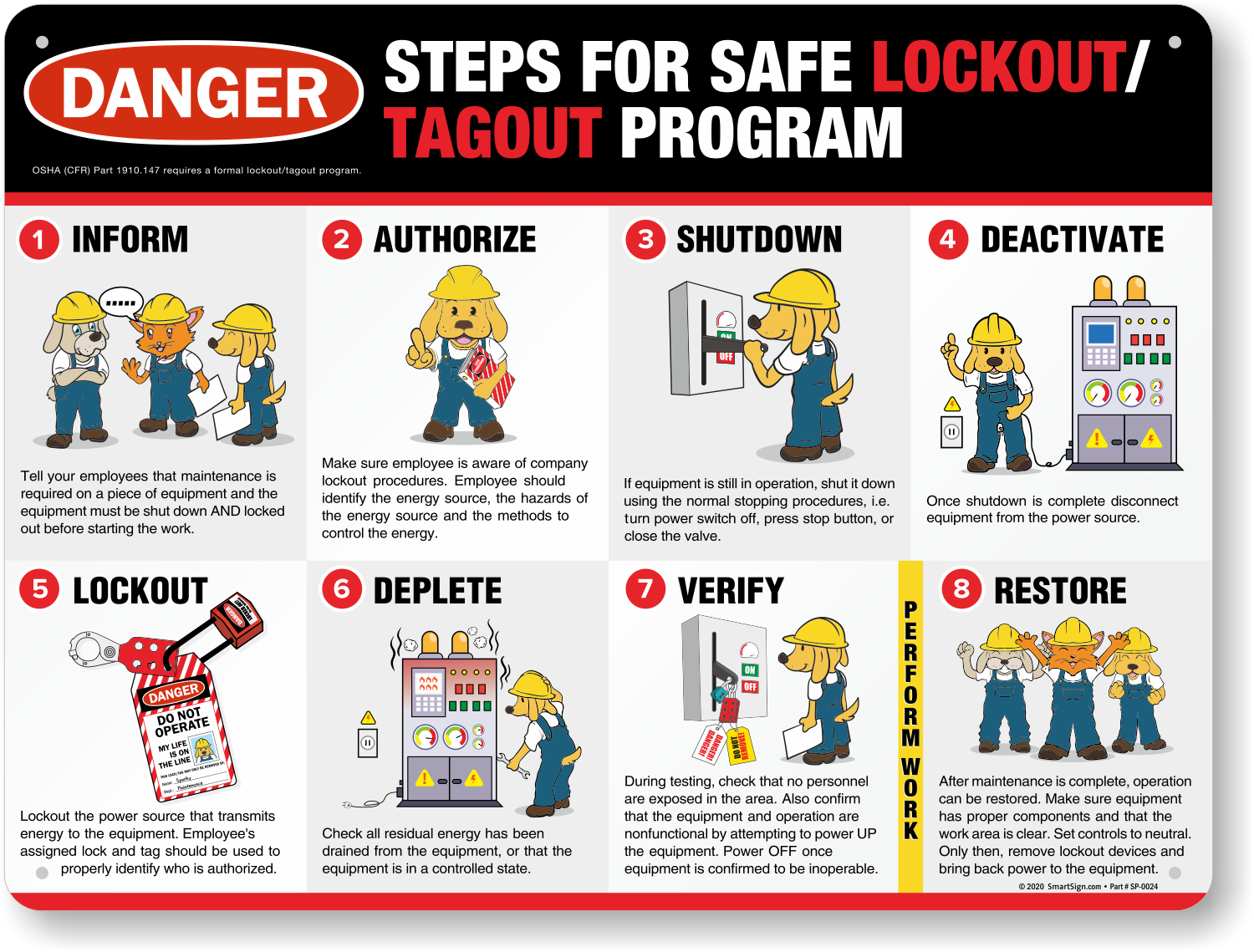
- Shut down machine
- Isolate all energy sources
- Apply personal lock and tag
- Verify zero energy
Each step visible, each step enforced.
This isn’t bureaucracy—it’s ritualized safety.
The Bottom Line: LOTO Boards and Locks Are Non-Negotiable
No amount of automation or advanced machinery matters if workers can’t service it safely. Lockout tagout boards and locks are simple in concept but powerful in execution. They turn safety from an abstract goal into a visible, tangible process.
Choose boards that scale with your needs. Invest in durable, role-specific locks. Train relentlessly. And never allow exceptions.
Because when the pressure’s on to restart a line, the only thing standing between a worker and a moving conveyor is a lock—and the system that supports it.
Frequently Asked Questions
What is the purpose of a lockout tagout board? A lockout tagout board organizes locks, tags, and procedures, ensuring accountability and compliance during maintenance.
Can a tag replace a lock? No. Tags are warnings; locks are physical barriers. OSHA requires both in most cases.
How many locks can one LOTO board hold? Boards range from 5 to 50+ lock stations. Choose based on your equipment count and team size.
Should every employee have their own lock? Yes. Personal locks ensure individual accountability—no shared or master locks during active service.
What materials are best for LOTO locks? Non-conductive, corrosion-resistant materials like nylon, brass, or stainless steel.
How often should LOTO equipment be inspected? Monthly visual checks and annual full inspections for wear, damage, or missing components.
Are digital LOTO systems worth the cost? In high-risk or large-scale facilities, yes. They provide audit trails, reduce human error, and integrate with safety management software.
FAQ
What should you look for in Lockout Tagout Boards and Locks: Safety Solutions That Work? Focus on relevance, practical value, and how well the solution matches real user intent.
Is Lockout Tagout Boards and Locks: Safety Solutions That Work suitable for beginners? That depends on the workflow, but a clear step-by-step approach usually makes it easier to start.
How do you compare options around Lockout Tagout Boards and Locks: Safety Solutions That Work? Compare features, trust signals, limitations, pricing, and ease of implementation.
What mistakes should you avoid? Avoid generic choices, weak validation, and decisions based only on marketing claims.
What is the next best step? Shortlist the most relevant options, validate them quickly, and refine from real-world results.