Every year, preventable accidents occur during equipment maintenance—workers injured or killed by machines that unexpectedly start up. The root cause? A failure in proper lockout tagout procedures. These incidents aren’t just tragedies; they’re violations of a fundamental safety principle: no maintenance should happen without isolating all hazardous energy sources.
Lockout tagout (LOTO) isn’t just a checklist—it’s a lifecycle of discipline, communication, and verification. When applied correctly, it prevents over 120 fatalities and thousands of injuries annually, according to OSHA. But when shortcuts are taken, the consequences are immediate and severe.
This guide breaks down the exact steps, real-world applications, and subtle pitfalls of proper LOTO execution. Whether you manage a manufacturing floor, oversee facility operations, or perform maintenance, mastering these procedures isn’t optional. It’s a responsibility.
What Is Lockout Tagout and Why It Matters
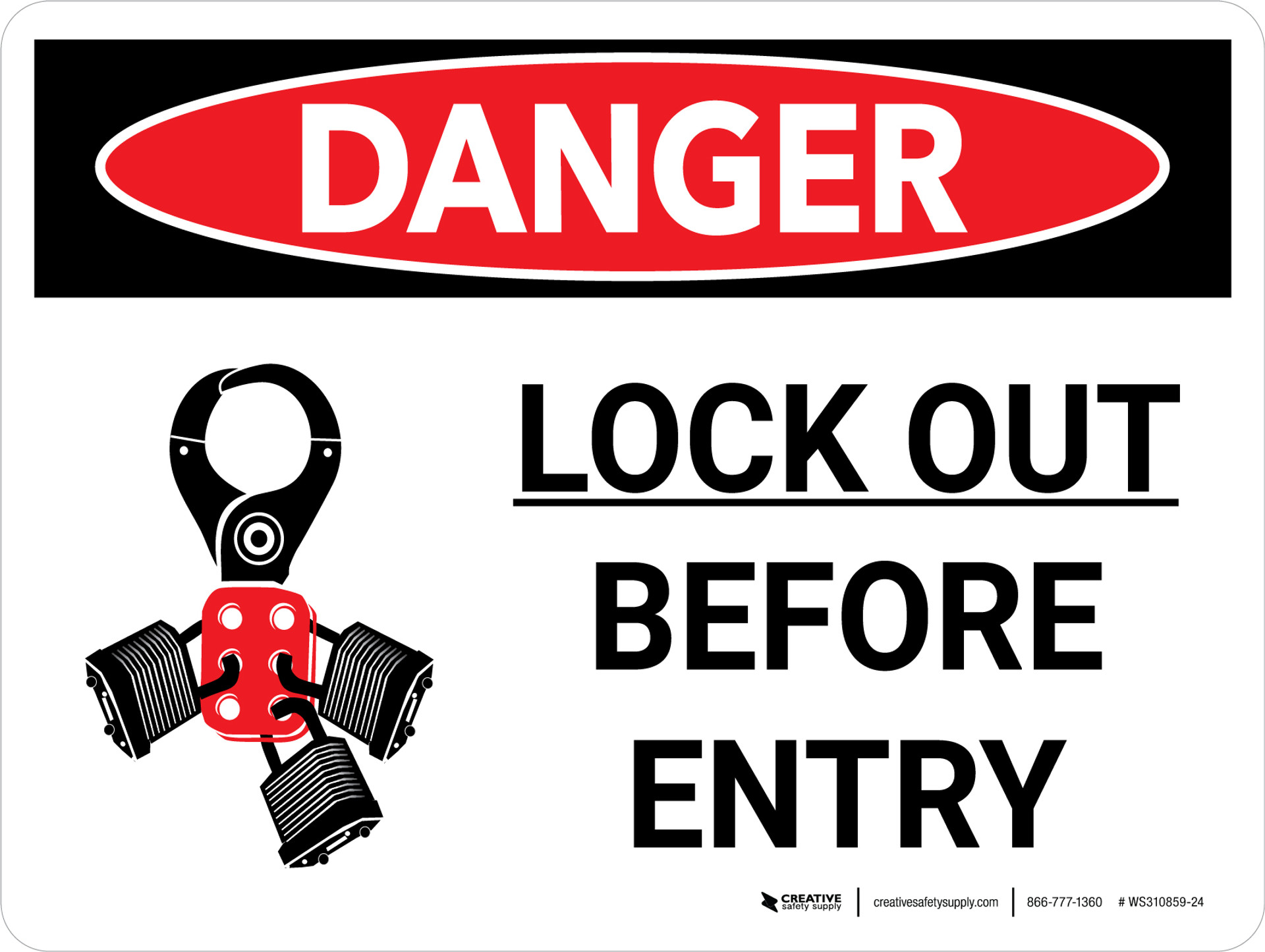
Lockout tagout is a safety procedure used to ensure that dangerous machines or energy sources are properly shut off and cannot be restarted before maintenance or servicing is complete. “Lockout” refers to physically locking energy-isolating devices, while “tagout” involves placing warning tags on those devices.
The core purpose? Eliminate the risk of unexpected energization, startup, or release of stored energy.
Consider this real example: A technician at a food processing plant was clearing a jam in a conveyor system. The machine wasn’t locked out. A coworker, unaware of the maintenance, restarted the line remotely. The result: a crushed hand and permanent nerve damage. This wasn’t a freak accident—it was a breakdown in LOTO.
OSHA’s 29 CFR 1910.147 sets the legal standard, but compliance isn’t just about avoiding fines. It’s about creating a culture where safety overrides urgency.
The 6 Critical Steps of Proper Lockout Tagout Procedures
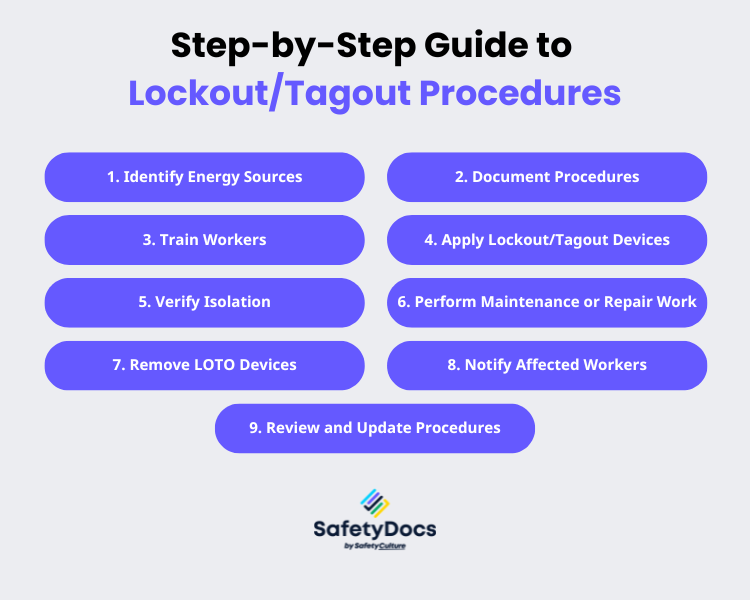
Following a standardized sequence is non-negotiable. Deviations increase risk exponentially. Here are the six essential steps every qualified worker must execute:
1. Preparation: Identify Energy Sources
Before any work begins, the authorized employee must identify all energy sources powering the equipment. This includes:
- Electrical
- Hydraulic
- Pneumatic
- Mechanical
- Chemical
- Thermal
Example: A printing press may use electrical motors, pneumatic rollers, and stored tension in springs. Missing any one of these during isolation creates a hazard.
Create an energy control plan specific to each machine. Use diagrams or schematics to document source locations.
2. Notification: Alert Affected Personnel
Warn all affected employees that maintenance is about to begin. This step ensures coordination and prevents accidental re-energization by uninformed staff.
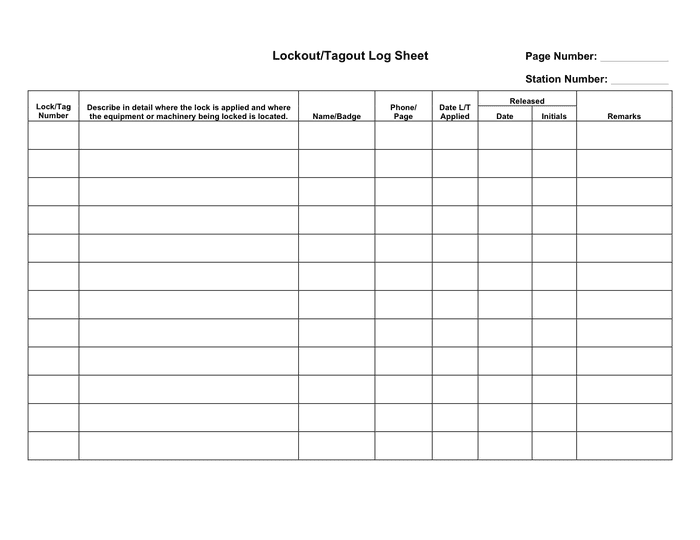
Best practice: Use a log or digital system to record notifications. In high-traffic environments, verbal confirmation is not enough.
3. Equipment Shutdown Using Normal Procedures
Shut down the machine using its designated stop controls—not emergency stops, which aren’t designed for routine isolation.
Common mistake: Workers hit the emergency stop button and assume the machine is safe. Emergency stops don’t disconnect power; they only interrupt the control circuit.
4. Isolation of All Energy Sources
Physically disconnect or block each energy source:
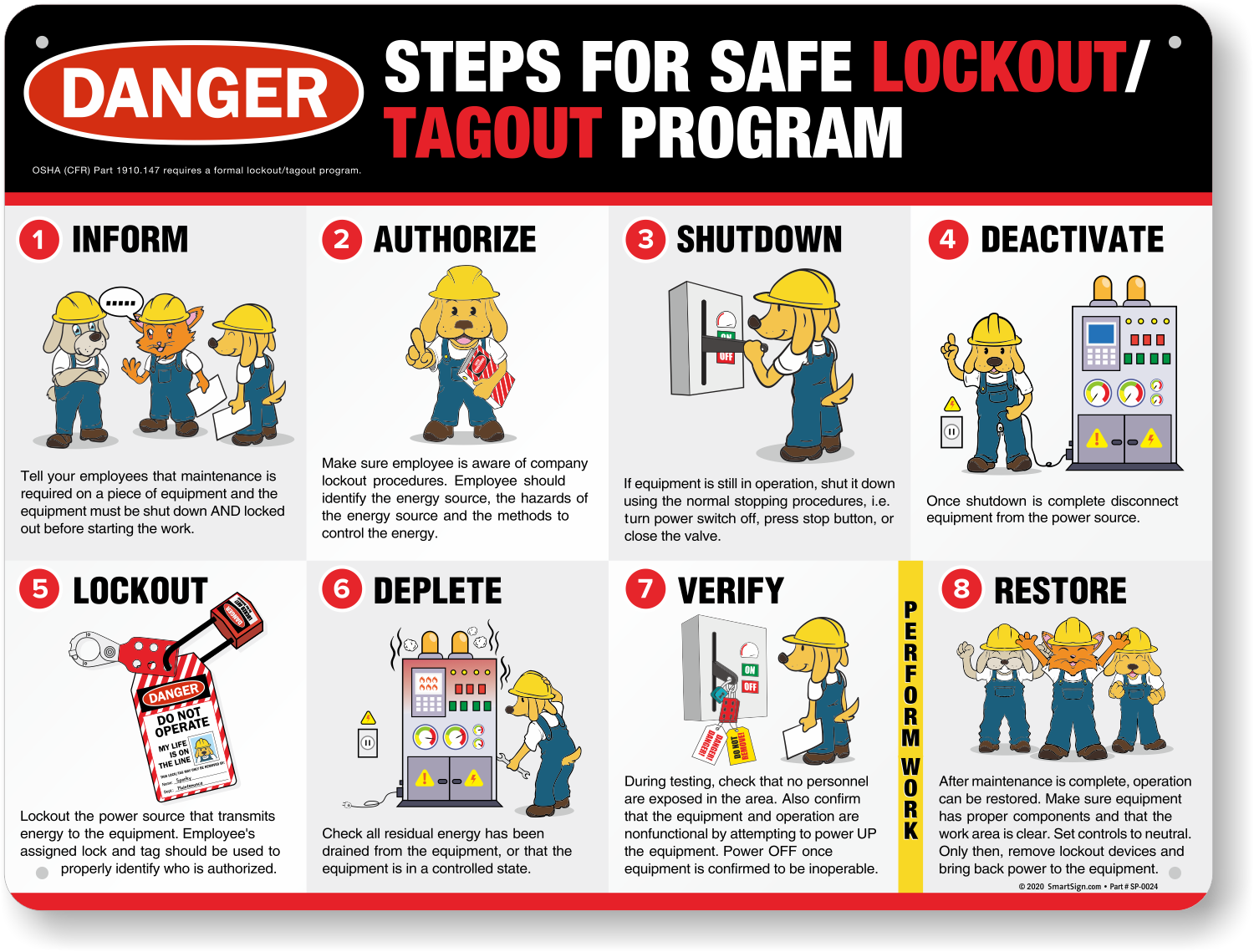
- Flip breakers to OFF and remove fuses
- Close valves on hydraulic/pneumatic lines
- Block moving parts that store mechanical energy (e.g., springs, flywheels)
- Drain or bleed residual pressure
Use lockable disconnects wherever possible. If a device can’t be locked, tagout procedures must include additional safety measures—like continuous supervision.
5. Apply Locks and Tags
Each authorized worker applies their personal lock and tag to every energy-isolating device. This is known as the “one person, one lock” rule.
Tags must include: - Worker’s name - Date and time - Reason for lockout - Department or crew
Never use master or group locks unless under specific, documented protocols with strict oversight.
6. Verify De-Energization
This is the most overlooked and most critical step. After locking out, test the equipment to confirm it cannot start.
Procedure: - Attempt to start the machine using normal controls - Check for stored energy release (e.g., pressure gauges, capacitor discharge) - Use voltage testers on electrical components
If the machine operates or shows residual energy, repeat the isolation process. The equipment is not safe.
Common LOTO Mistakes That Endanger Lives
Even experienced teams make avoidable errors. Here are the top five:
- Skipping verification – Assuming a machine is dead without testing. Always verify.
- Using someone else’s lock – Only the worker who applied the lock should remove it.
- Tag-only systems without locks – Tags can be ignored or removed; locks provide physical security.
- Group lockout without proper coordination – Multiple workers need a group lockbox with individual locks on the hasp.
- Rushing re-energization – Failing to ensure all tools are removed and personnel are clear before restarting.
Real case: At a Midwest auto parts facility, a mechanic removed his lock after finishing work, but another worker remained inside the press. The shift supervisor re-energized the system, causing fatal crush injuries. The investigation found no verification checklist was used.
Equipment and Tools for Effective LOTO Execution Using the right tools increases compliance and reduces human error. Here are five essential LOTO tools and their applications:
| Tool | Purpose | Real-World Use Case |
|---|---|---|
| Lockout Hasps | Allow multiple locks on a single isolation point | Maintenance team servicing a conveyor system |
| Valve Lockouts | Secure closed valves on fluid lines | Chemical plant shutting down a reactor |
| Circuit Breaker Locks | Prevent re-energizing electrical panels | Electrical room servicing during plant downtime |
| Lockout Stations | Centralized storage for locks, tags, and devices | Assembly line with frequent machine maintenance |
| Group Lockout Boxes | Coordinate multiple workers on one job | HVAC team servicing a rooftop unit |
Invest in durable, standardized equipment. Mismatched or flimsy locks contribute to inconsistent practices.
When Multiple Workers Are Involved: Group Lockout Protocols
Complex maintenance often requires several technicians. In these cases, a group lockout procedure must be followed:
- Appoint a primary authorized employee to oversee the process.
- Use a lockout hasp or group lockbox attached to each energy source.
- Each worker applies their personal lock to the hasp or box.
- Only when all work is complete do locks get removed—individually, by the person who applied them.
Never allow a supervisor to remove a worker’s lock, even if they’ve left the site. If a lock must be removed, follow a documented, witnessed override procedure.
Tip: Use check-in/check-out logs for team members to confirm their status before re-energization.
Industry-Specific LOTO Challenges and Solutions
Different environments present unique risks. Here’s how proper procedures adapt:
Manufacturing
- High machine density increases risk of miscommunication.
- Solution: Use color-coded locks by department and digital LOTO management software.
Construction
- Temporary power sources and mobile equipment complicate isolation.
- Solution: Treat generators and extension cords as energy sources—lock and tag them too.
Healthcare
- Medical devices like MRI machines store powerful magnetic and electrical energy.
- Solution: Follow manufacturer-specific LOTO instructions; use trained biomedical engineers.
Utilities
- High-voltage systems require additional PPE and two-person verification.
- Solution: Integrate LOTO with confined space and arc flash protocols.
One hospital reduced LOTO errors by 70% after switching to digital work permits that required photo verification of lock placement.
Training, Audits, and Continuous Improvement
Proper LOTO procedures only work if people understand and follow them. OSHA requires initial and annual retraining for all authorized and affected employees.
Effective training includes: - Hands-on practice with real equipment - Role-playing emergency scenarios - Review of near-misses and past incidents
Additionally, conduct regular audits—at least annually, or after an incident. An audit should: - Observe actual lockout procedures - Inspect locks and tags for condition and compliance - Verify documentation and energy control plans
One auto manufacturer cut LOTO violations in half by introducing surprise audits and peer-led safety reviews.
Final Thoughts: Safety Is a Process, Not a Procedure
Lockout tagout isn’t a formality. It’s the last line of defense between a routine repair and a life-altering injury. Proper procedures demand discipline, communication, and constant vigilance.
Start today: Audit one machine’s LOTO process. Are all energy sources identified? Are locks personal and non-removable by others? Is de-energization verified every time?
Fix the gaps. Train your team. Lead by example. When LOTO is treated with the seriousness it deserves, safety becomes culture—not compliance.
What is the most important step in lockout tagout? Verifying de-energization is the most critical step. Without testing to confirm the machine cannot start, all previous steps are incomplete.
Can a tag alone be used instead of a lock? Only if a lock cannot be applied and a documented tagout-only procedure is in place with extra safety measures, such as continuous supervision.
Who is responsible for applying lockout devices? Authorized employees—those trained and responsible for implementing energy control—are the only ones who can apply and remove locks and tags.
How often should LOTO procedures be reviewed? At least annually, or whenever there’s a change in equipment, process, or after an incident.
What should a lockout tag include? The worker’s name, date, time, reason for lockout, and contact information. It should be durable and legible.
Can multiple people use the same lock during group maintenance? No. Each worker must use their own personal lock. Group lockout uses a hasp or box where individual locks are applied.
What happens if a worker leaves with their lock still in place? The lock should only be removed under a formal, documented procedure involving management, verification that the worker is clear, and often a witness.
FAQ
What should you look for in Mastering Proper Lockout Tagout Procedures for Workplace Safety? Focus on relevance, practical value, and how well the solution matches real user intent.
Is Mastering Proper Lockout Tagout Procedures for Workplace Safety suitable for beginners? That depends on the workflow, but a clear step-by-step approach usually makes it easier to start.
How do you compare options around Mastering Proper Lockout Tagout Procedures for Workplace Safety? Compare features, trust signals, limitations, pricing, and ease of implementation.
What mistakes should you avoid? Avoid generic choices, weak validation, and decisions based only on marketing claims.
What is the next best step? Shortlist the most relevant options, validate them quickly, and refine from real-world results.