Workers get hurt every year not because they’re careless—but because they assume a machine is off when it isn’t. That’s where lockout tagout (LOTO) comes in. It’s not just a safety procedure; it’s a legally mandated system designed to isolate hazardous energy and prevent accidental startup during maintenance or servicing. Yet, misconceptions persist, procedures get misapplied, and gaps in training lead to preventable risks.
This guide cuts through the confusion with direct lockout tagout questions and answers drawn from real-world safety operations. Whether you manage a plant, supervise technicians, or perform maintenance, these insights clarify compliance, correct errors, and strengthen safety culture.
What Exactly Is Lockout Tagout and Why Does It Matter?
Lockout tagout is a structured safety process used to disable machinery or equipment during maintenance, ensuring that hazardous energy sources—electrical, mechanical, hydraulic, pneumatic, chemical, thermal, or other—are isolated and can’t be re-energized until work is complete.
The core idea is simple: physically lock energy-isolating devices (like circuit breakers or valve handles) and tag them to indicate work is in progress. Only the worker who applied the lock can remove it.
Why it matters: According to OSHA, failure to control hazardous energy accounts for nearly 10% of serious accidents in manufacturing. Workers suffer electrocutions, crushing injuries, burns, and amputations when machines start unexpectedly. LOTO prevents these incidents—when done correctly.
Real-world example: A maintenance technician opens a conveyor system to replace a drive belt. Without LOTO, a coworker resets a breaker remotely, believing the line is idle. The conveyor activates, pulling the technician’s arm into moving parts. With proper lockout, the energy source would’ve been isolated and locked, preventing startup.
Who Is Responsible for Implementing LOTO?
Responsibility falls across three key roles defined by OSHA’s 29 CFR 1910.147:
- Authorized Employees: Trained workers who physically implement LOTO procedures. They know energy sources, isolation points, and proper lock application.
- Affected Employees: Operators who use or interact with the equipment but don’t perform maintenance. They must understand LOTO’s purpose and recognize when it’s active.
- Employers: Ultimately responsible for developing written energy control programs, providing locks/tags, delivering training, and conducting annual audits.
Common mistake: Supervisors often assume posting a tag is enough. But without formal training and documented procedures, compliance is incomplete—and dangerous.
Workplace tip: Hold quarterly LOTO drills where authorized employees walk through full shutdown and isolation of high-risk machines. Observe and correct errors in real time.
What Are the Critical Steps in a LOTO Procedure?
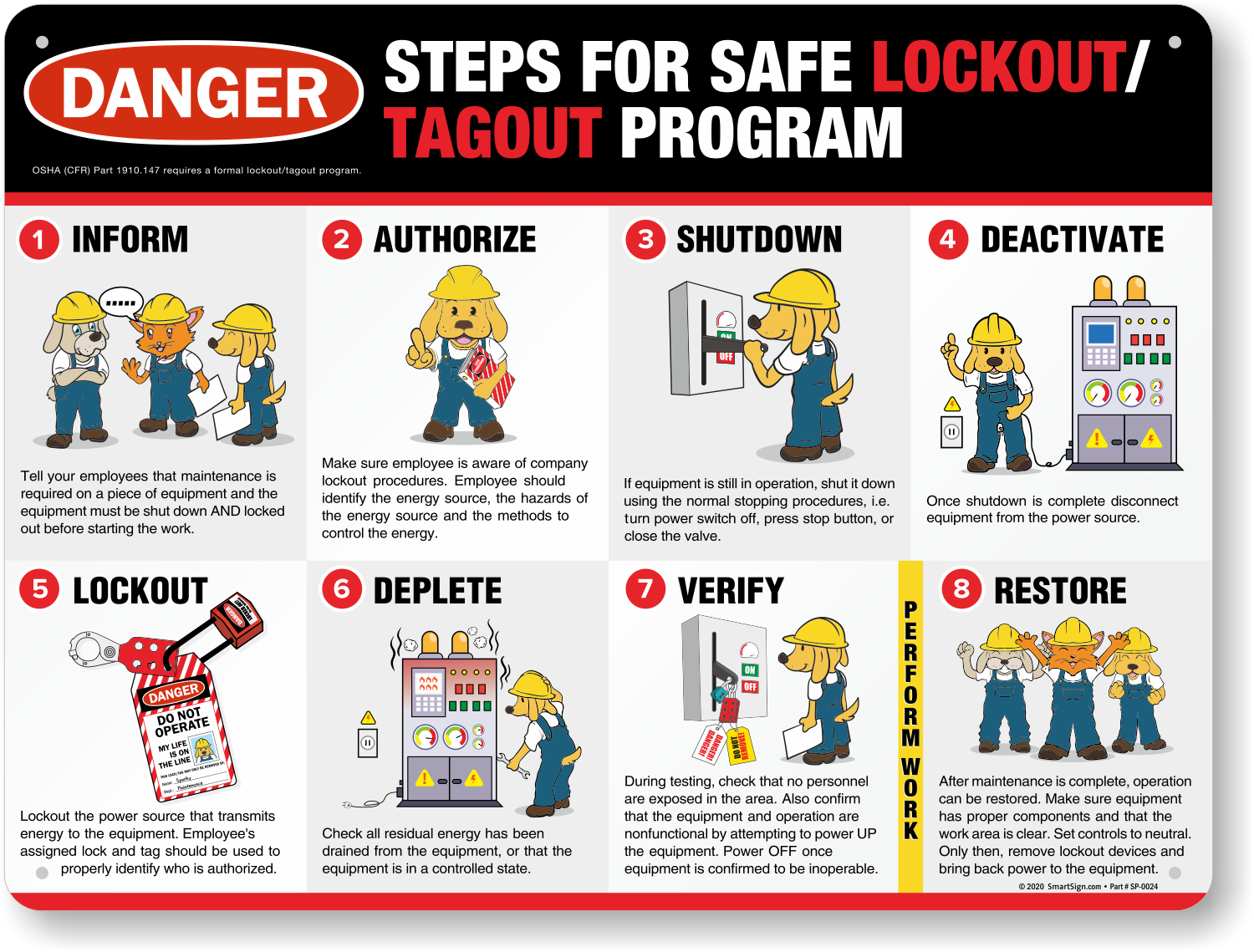
A proper LOTO sequence isn’t optional—it’s sequential and non-negotiable. Here’s the standard six-step process:
- Preparation: Identify the type and magnitude of energy sources and the methods to control them.
- Notification: Inform affected employees that a shutdown is about to occur.
- Shutdown: Turn off the machine using normal stopping procedures.
- Isolation: De-energize all energy sources (e.g., flip breakers, close valves).
- Verification: Attempt to restart the machine (via normal controls) to confirm zero energy.
Critical insight: Verification is where many failures occur. Skipping this step—or doing it half-heartedly—means you haven’t confirmed the machine is truly de-energized.

Use case: On a hydraulic press, a technician shuts it down but forgets the accumulator still holds pressurized fluid. During disassembly, stored energy releases violently. Proper LOTO would require bleeding the accumulator and locking the hydraulic valve.
What’s the Difference Between Lockout and Tagout? This is one of the most frequently misunderstood lockout tagout questions.
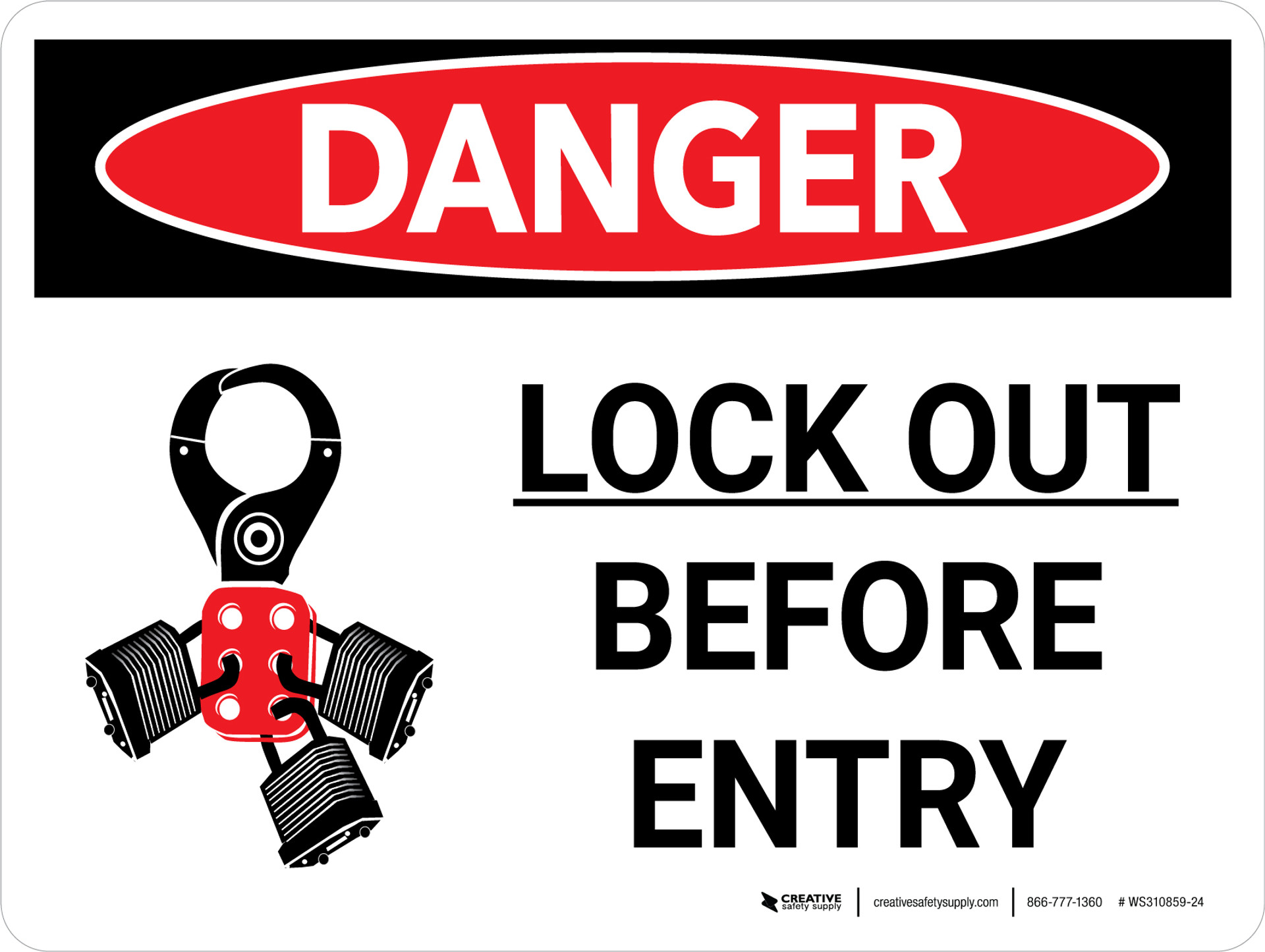
- Lockout uses a physical lock (like a hasp or valve lock) to prevent re-energizing a device.
- Tagout relies on a warning tag attached to the energy source.
OSHA allows tagout only if a lock can’t be applied—but with strict conditions: the tag must be as effective as a lock, include a performance test, and be backed by additional safety measures.
Limitation of tagout: Tags can be removed, ignored, or deteriorate. Locks provide a physical barrier.
Best practice: Use lockout wherever possible. If you must use tagout, require a secondary control measure—like removing a circuit breaker or disconnecting a hose—and document the justification.
What Equipment Requires LOTO?
Not every piece of equipment needs LOTO—but any that could release hazardous energy during servicing does. OSHA’s scope includes machines, equipment, and processes where unexpected energizing could cause injury.
High-risk examples: - Conveyor systems - Industrial ovens - Hydraulic presses - Pneumatic tools - Chemical processing tanks - Electrical panels
Gray areas: - Corded tools unplugged by the user - Equipment with a single control point and minimal stored energy
OSHA exception: Minor tool changes or adjustments covered under routine production (e.g., clearing a jam) may not require full LOTO if they’re performed using alternative protective measures, like point-of-operation guarding.
Practical tip: Create an equipment-specific LOTO matrix listing each machine, its energy sources, and required control methods. Keep it accessible in maintenance areas.
What Are Common LOTO Violations and How Can You Avoid Them?
Even organizations with LOTO programs make critical errors. Top OSHA citations include:
| Violation | Consequence | Prevention |
|---|---|---|
| Incomplete energy control procedures | Equipment partially energized | Map all energy sources per machine |
| Failure to provide adequate training | Workers don’t know roles | Train both authorized and affected staff annually |
| Group lockout confusion | Multiple workers, one lock | Use a group lockout box with individual locks |
| Using master or override keys | Bypasses safety | Eliminate master keys unless for emergencies with strict controls |
| Poor tag quality | Tags fade, fall off | Use durable, weather-resistant tags with clear warnings |
Real mistake: A supervisor uses a single lock to cover an entire maintenance team. One worker finishes early and removes the lock—re-energizing the machine while others are still inside. The fix? Group lockout boxes: each worker applies their own lock to a central hasp.
How Do You Handle Shift Changes or Extended Lockout Periods?
LOTO doesn’t end at shift’s end. Continuity is crucial.
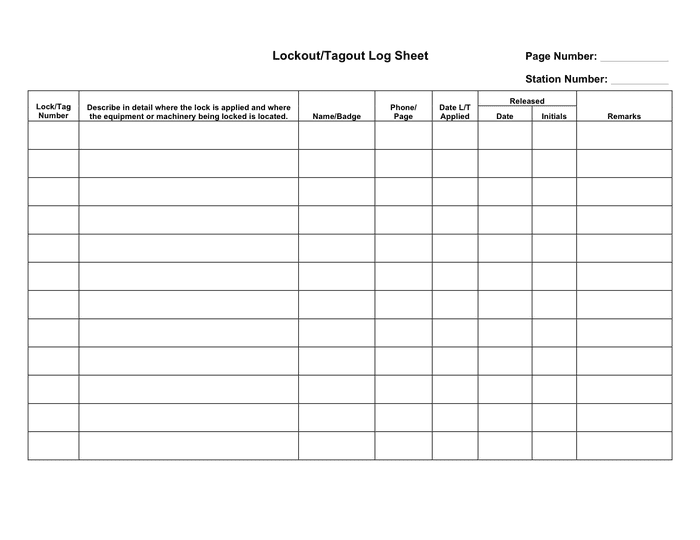
Best approach: Use a shift交接 (handover) protocol: - The outgoing authorized employee must keep their lock on until the incoming technician applies theirs. - Conduct a face-to-face briefing detailing work status, isolation points, and hazards. - Document the transfer in a log or digital system.
What not to do: Leaving a lock on “overnight” without a plan. OSHA requires that locks be removed when the worker is no longer responsible—unless a formal handover occurs.

Pro tip: For long-term maintenance (e.g., plant turnaround), use a LOTO permit system. It logs who applied locks, work scope, and expected duration—helping manage multiple teams and overlapping tasks.
Can LOTO Be Automated or Digitized?
Yes—digital LOTO systems are emerging, especially in high-complexity plants.
These platforms use IoT sensors, mobile apps, and centralized dashboards to: - Track lock application and removal in real time - Send alerts if a lock is bypassed - Store electronic records for audits - Manage multi-person or multi-point procedures
Top 5 LOTO Tools and Systems:
| Tool | Key Feature | Best For |
|---|---|---|
| Lockout Pro | Mobile app for procedure access and compliance tracking | Field teams needing offline access |
| SpheraCloud EHS | Integrated with broader safety management, includes digital LOTO workflows | Large enterprises |
| Seton iLockout | Database of LOTO procedures by equipment type | Facilities with standardized machinery |
| LockoutWorks | Cloud-based procedure builder with audit trails | Companies scaling LOTO programs |
| Master Lock eCLIP™ | Bluetooth-enabled padlocks that log usage | Tracking individual lock activity |
Reality check: Digital tools enhance LOTO—they don’t replace it. Physical locks and human verification remain essential. Treat tech as a support layer, not a substitute.
How Often Should LOTO Procedures Be Reviewed?
OSHA mandates two types of reviews:
- Annual inspections of each energy control procedure to verify it’s being followed and remains accurate.
- Re-training whenever procedures change or an employee’s role shifts.
What makes an inspection effective? - A trained auditor watches an authorized employee perform a full LOTO sequence. - The auditor checks for deviations and documents them. - Corrective actions are assigned and tracked.
Common flaw: Inspections that are paperwork-only—reviewing the written procedure without observing it in action—miss real-world gaps.
Workflow tip: Schedule inspections during planned maintenance. Pair them with refresher training to reinforce learning.
Lockout tagout isn’t a one-time policy—it’s a living safety practice. The right answers to common lockout tagout questions don’t just satisfy compliance; they build a culture where every worker trusts that a locked machine stays off. Implement clear procedures, train rigorously, inspect consistently, and eliminate shortcuts. Lives depend on it.
Take action today: Audit one high-risk machine’s LOTO process. Walk through each step, involve the technician, and verify isolation. Fix what’s broken—before an incident does.
Frequently Asked Questions
What is the primary goal of lockout tagout? To protect workers from unexpected energization or release of hazardous energy during maintenance.
Can someone else remove your lock? Only under strict "authorized removal" procedures, such as emergency situations with documented approval and safety steps.
Are LOTO tags required to be standardized? Yes, tags must be durable, legible, and include warnings like "Do Not Start" or "Do Not Operate."
Do battery-powered tools need LOTO? Yes, if they store hazardous energy. Remove the battery and lock it separately if servicing requires disassembly.
Is LOTO required for routine cleaning? Not always—minor servicing during normal production may be exempt if guarded properly.
Can a single lock cover multiple energy sources? Only if a single isolation point controls all energy. Otherwise, each source must be individually locked.
What happens if a lock is left on after a shift? It must be removed via a formal procedure, including notification, verification the worker is absent, and safe re-energization.
FAQ
What should you look for in Lockout Tagout Questions and Answers You Need to Know? Focus on relevance, practical value, and how well the solution matches real user intent.
Is Lockout Tagout Questions and Answers You Need to Know suitable for beginners? That depends on the workflow, but a clear step-by-step approach usually makes it easier to start.
How do you compare options around Lockout Tagout Questions and Answers You Need to Know? Compare features, trust signals, limitations, pricing, and ease of implementation.
What mistakes should you avoid? Avoid generic choices, weak validation, and decisions based only on marketing claims.
What is the next best step? Shortlist the most relevant options, validate them quickly, and refine from real-world results.