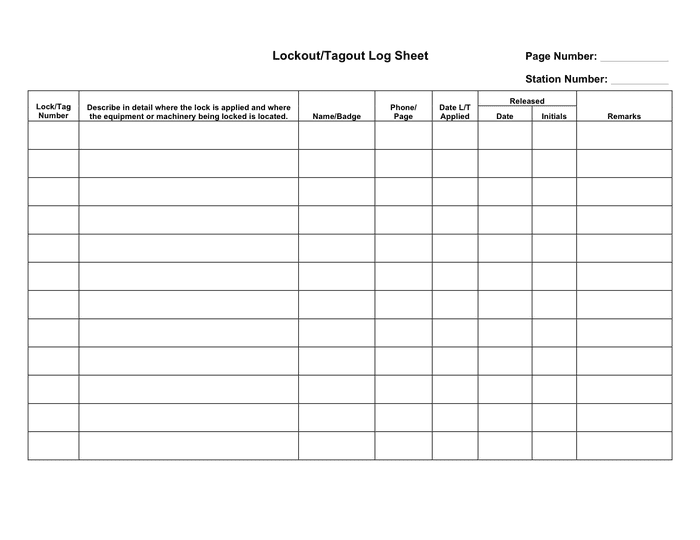
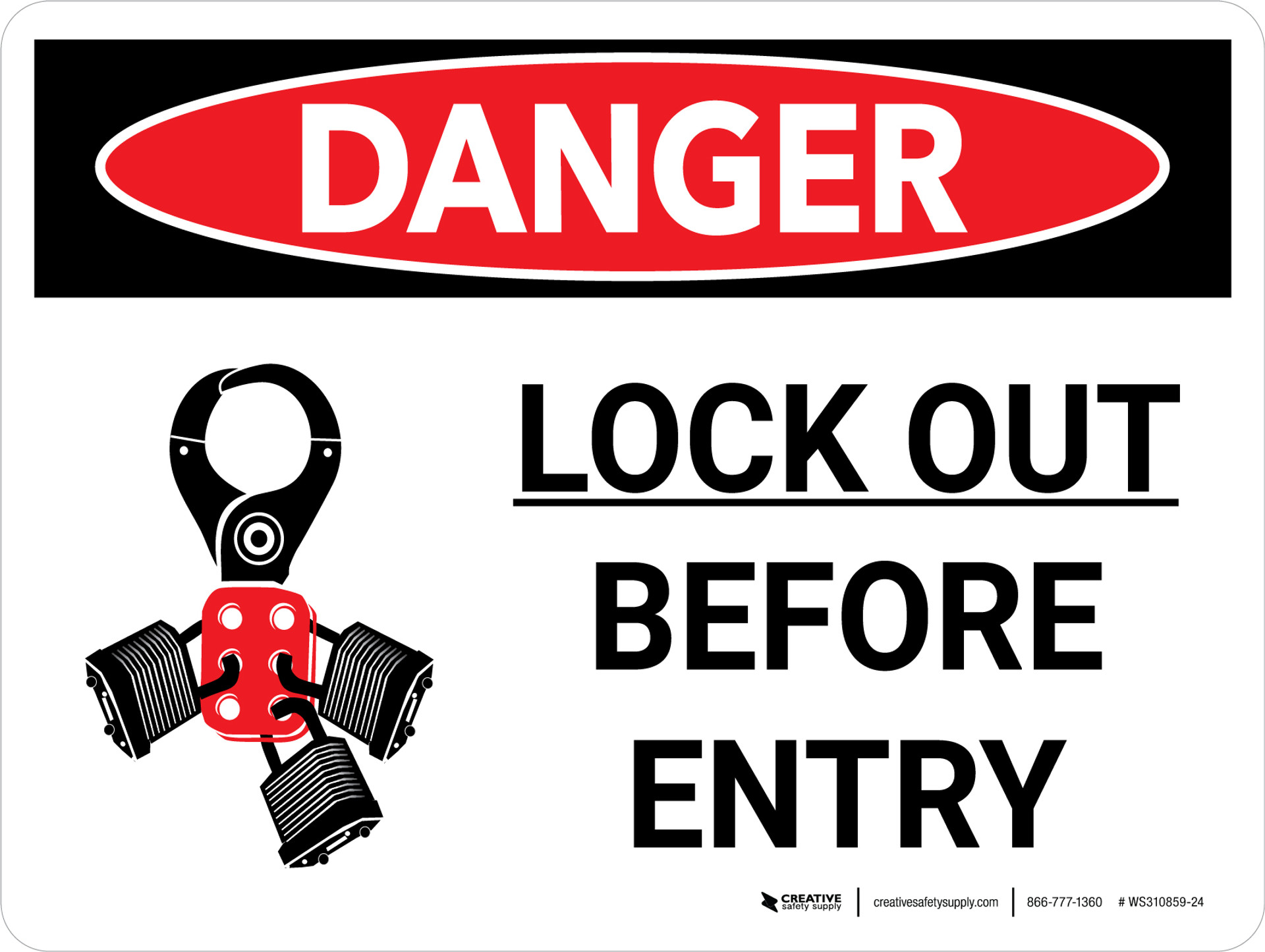
Workers die every year from unexpected machine startups during maintenance. A single missed step in energy isolation can lead to amputations, electrocutions, or fatalities. The solution isn’t complex technology—it’s a clear, enforceable lockout tagout policy. And the fastest way to get there? A well-structured lockout tagout policy template.
But not just any template will do. Generic, one-size-fits-all documents often fail because they don’t reflect real operations. The best templates act as living documents—specific, adaptable, and aligned with OSHA 29 CFR 1910.147. This guide delivers more than a fill-in-the-blank form. It gives you a framework grounded in real compliance needs, common pitfalls, and practical implementation.
Why a Lockout Tagout Policy Template Isn’t Optional
OSHA doesn’t require a “template.” It requires an Energy Control Program (ECP) with written procedures, employee training, and periodic inspections. Most companies fulfill this with a formal lockout tagout (LOTO) policy—typically built from a template.
Yet many safety managers grab the first free PDF from a Google search. That’s how policies end up referencing non-existent equipment, using vague language, or skipping critical roles like “authorized vs. affected employees.”
A proper template solves this by offering: - Standardized structure that meets regulatory requirements - Clear assignment of responsibilities - A foundation for site-specific customization
Without it, you’re building compliance from scratch—wasting time and increasing risk.
Core Components of an Effective Lockout Tagout Policy Template
A functional LOTO policy isn’t a single document. It’s a system composed of several integrated parts. Your template must include these non-negotiable sections:
1. Purpose and Scope Define why the policy exists and where it applies. Avoid broad statements like “to ensure safety.” Be specific: > This policy applies to all servicing and maintenance activities involving machines or equipment that could unexpectedly energize, start up, or release stored energy.
Include exclusions if relevant (e.g., corded plug equipment under full employee control).
2. Definitions Clarify terms everyone will use:
- Authorized employee: Trained to implement LOTO procedures
- Affected employee: Operates or uses equipment but doesn’t service it
- Energy isolating device: A disconnect, valve, or block that stops energy flow
- Lockout device: A lock that holds an energy isolating device in the “safe” position
- Tagout device: A warning tag (used with or without a lock)
Misunderstanding these leads to improper application—especially when temporary tag-only use is permitted.
3. Roles and Responsibilities Spell out who does what:
- Employer: Provides training, devices, and audits
- Authorized employee: Applies locks, follows procedures, verifies zero energy
- Affected employee: Recognizes when LOTO is in use and doesn’t bypass it
Assign accountability. Example: “Maintenance supervisors must approve all deviations from standard procedures.”
4. Step-by-Step Procedures
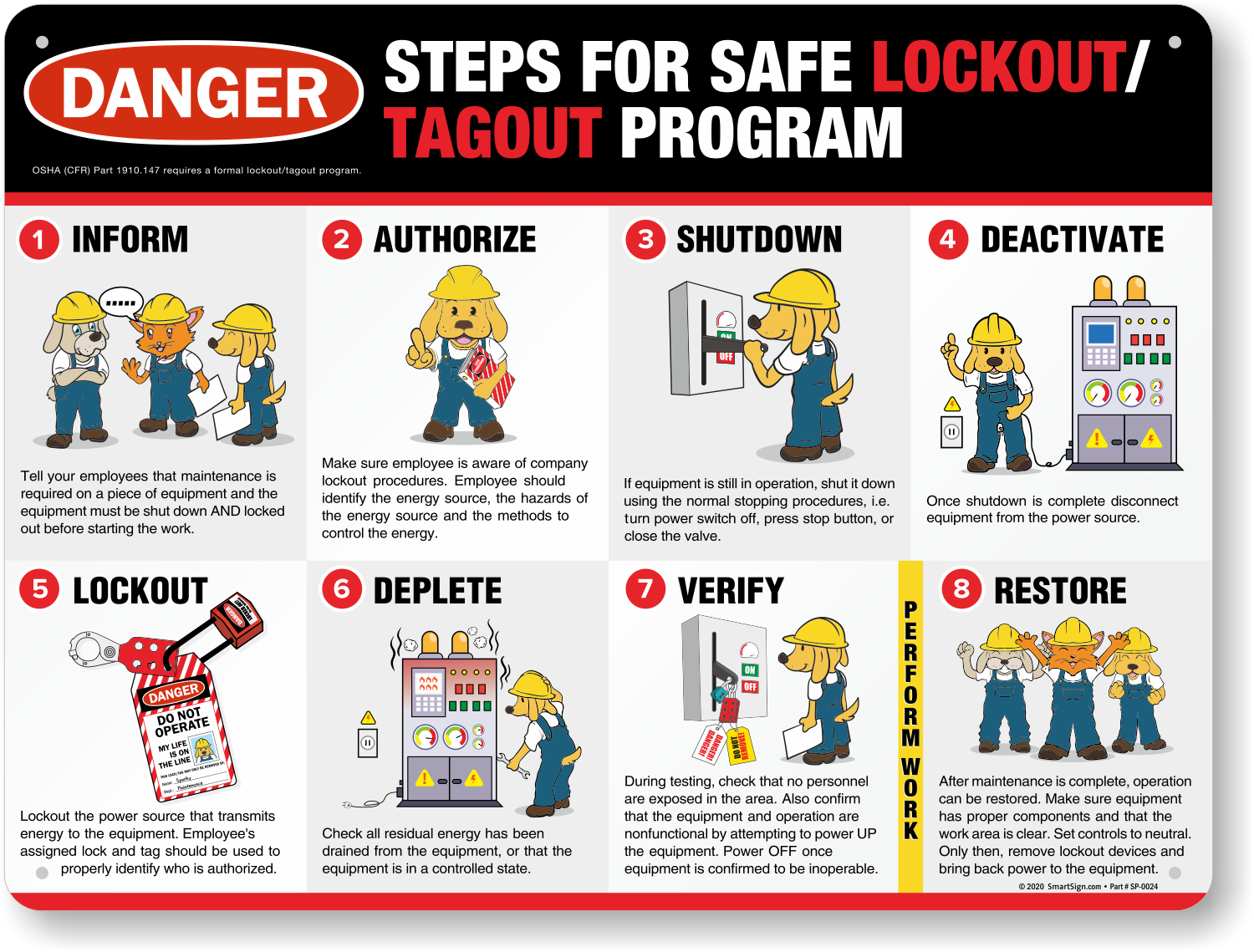
This is the heart of the template. Use a standardized format for each machine or equipment class. Include: - Preparation (shut down, notify affected staff) - Isolation (disconnect energy sources: electrical, hydraulic, pneumatic, etc.) - Lock and tag application (each worker applies their own lock) - Stored energy release (bleed lines, block moving parts) - Verification (test for zero energy) - Removal (only by the person who applied the lock)
Never assume staff know how to “test” a machine. Specify: “Attempt to start the machine using normal controls while standing clear.”
5. Training and Retraining State initial and annual retraining requirements. Include:
- Certification records
- Hands-on demonstration requirement
- Refresher training after procedure changes or incidents
Example clause: > All authorized employees must undergo retraining every 12 months or after a procedural audit reveals noncompliance.
6. Periodic Inspections Mandate at least annual audits of each LOTO procedure. Identify: - Who conducts the audit (e.g., safety officer) - That it must include a review with the authorized employee - Documentation requirements (date, names, findings, corrections)
7. Device Specifications Define acceptable locks, tags, hasps, and storage:
- Locks must be keyed differently from other site locks
- Tags must include “Do Not Operate,” employee name, date, reason
- Hasps allow multiple locks on one isolation point
Pro tip: Use color-coded locks by department to reduce confusion.
Real-World Example: Applying a Template in a Manufacturing Plant
A food processing facility uses a LOTO policy template to cover its packaging line. The initial template was downloaded from a safety resource site. But instead of using it as-is, the safety team customized it:
- Added site-specific equipment IDs (e.g., “Conveyor System C-7”)
- Identified dual energy sources: electrical and pneumatic
- Created a diagram showing isolation points (disconnect switch + air line valve)
- Required dual verification: one technician tests electrical, another checks air pressure
They printed laminated procedure cards and mounted them near each machine. During a surprise audit, OSHA found full compliance—because the template had been adapted, not adopted.
Common Mistakes That Undermine LOTO Policies
Even strong templates fail when misapplied. Watch for these:
1. Copy-Paste Without Customization Using a generic procedure for a unique machine is worse than having no policy. Always validate isolation points and energy types.
2. Skipping Verification Steps Many workers lock out but never test. The policy must require verification and define how it’s done.
3. Allowing "Group Lockout" Without a Coordinator Multiple workers on one machine? Assign a lead authorized employee who coordinates lock application and removal.
4. Inconsistent Device Use Using household padlocks or handwritten tags creates ambiguity. The template should specify approved devices.
5. Poor Training Documentation If you can’t prove training occurred, OSHA considers it nonexistent. Use sign-in sheets with quiz results.
How to Customize Your Lockout Tagout Policy Template
Start with a solid template, then refine it:
- Conduct an Equipment Audit
- List every machine requiring LOTO. Note energy types and isolation points.
- Map Procedures to Real Workflows
- Shadow maintenance staff. Are they bypassing steps? Is the sequence practical?
- Use Visual Aids
- Add diagrams showing where to lock and tag. Photos work better than text.
- Integrate with Existing Systems
- Link LOTO procedures to work order systems or permit-to-work software.
- Pilot and Revise
- Test the policy on one line. Gather feedback. Fix gaps before company-wide rollout.
A template isn’t a finish line—it’s a starting point. The real value comes from adaptation.
Top 5 Sources for Lockout Tagout Policy Templates
While you can build from scratch, proven templates save time and reduce legal risk. Here are reliable sources:
| Source | Type | Key Features | Best For |
|---|---|---|---|
| OSHA.gov | Free PDF | Official language, regulatory alignment | Compliance baseline |
| NIOSH / CDC | Free toolkit | Industry-specific examples, training aids | Healthcare, labs |
| SafetyNow | Paid platform | Customizable templates, e-learning | Mid to large companies |
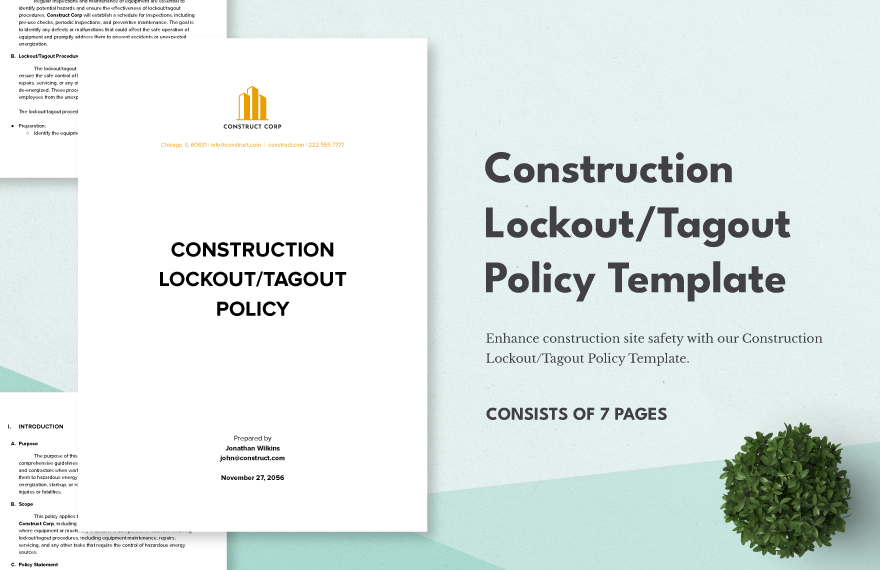
| Creative Safety Supply | Free downloads | Visual templates, multilingual tags | Facilities with non-English speakers |
| Enablon (now Intelex) | EHS software | Digital LOTO, audit tracking, mobile access | Enterprises needing automation |
Free isn’t always better. Some free templates lack annual review reminders or role definitions. Paid platforms often include version control and training modules—critical for maintaining compliance.
Making the LOTO Policy Actionable: Beyond the Document
A policy on a shelf does nothing. To make it operational:
- Store procedures near equipment, not in a binder in the office
- Conduct unannounced drills—can workers correctly lock out a machine in under 3 minutes?
- Audit at least annually, involving both safety staff and maintenance teams
- Track lockout frequency—a sudden drop may signal procedural problems
- Reward compliance, not just punish violations
One plant reduced LOTO errors by 70% after introducing monthly “safety spot checks” with immediate feedback.
Final Step: Implement, Train, Review
A lockout tagout policy template is only the beginning. True safety comes from consistent use, clear accountability, and constant refinement.
Start with a solid template. Customize it to your operations. Train your people—not just once, but repeatedly. Audit every year. Update after every near-miss.
Your template isn’t compliance theater. It’s a roadmap to prevent life-altering injuries.
Download a trusted base template today. Then make it yours—specific, practical, and enforceable. Because when a machine powers on unexpectedly, the difference between a close call and a catastrophe is a policy that works when it matters most.
Frequently Asked Questions
What is a lockout tagout policy template? A standardized document that outlines procedures for safely isolating energy sources during equipment maintenance, ensuring compliance with OSHA regulations.
Do I need a different template for each machine? Not necessarily. Group similar machines under one procedure, but ensure each unique energy source and isolation point is addressed.
Can I use a free lockout tagout template from the internet? Yes, but always customize it to your site, equipment, and workforce. Generic templates often miss critical operational details.
Who writes the lockout tagout policy? Typically, the safety manager or EHS officer, in collaboration with maintenance supervisors and authorized employees.
How often should the policy be reviewed? At minimum, annually—via formal audits of each procedure. Also review after incidents, near-misses, or equipment changes.
Are electronic LOTO systems better than paper templates? They can be, especially for large or complex facilities. Digital systems offer tracking, reminders, and integration with work orders—but only if properly implemented.
What happens if we don’t have a written LOTO policy? OSHA can issue citations with penalties up to $15,625 per violation. More importantly, the risk of serious injury increases dramatically.
FAQ
What should you look for in Lockout Tagout Policy Template: A Practical Guide for Safety? Focus on relevance, practical value, and how well the solution matches real user intent.
Is Lockout Tagout Policy Template: A Practical Guide for Safety suitable for beginners? That depends on the workflow, but a clear step-by-step approach usually makes it easier to start.
How do you compare options around Lockout Tagout Policy Template: A Practical Guide for Safety? Compare features, trust signals, limitations, pricing, and ease of implementation.
What mistakes should you avoid? Avoid generic choices, weak validation, and decisions based only on marketing claims.
What is the next best step? Shortlist the most relevant options, validate them quickly, and refine from real-world results.