A technician reaches into a jammed conveyor belt. The machine seems off—no lights, no sound. But someone flips a switch upstream. The belt jerks to life. In seconds, a life is changed forever.
This isn’t hypothetical. It’s a preventable tragedy that happens when lockout tagout (LOTO) procedures are ignored or misunderstood. The core question isn’t just whether you have a LOTO program—it’s knowing when it must be applied.
Lockout tagout is required whenever workers service or maintain machinery and equipment where unexpected energization, startup, or release of stored energy could cause injury. But that simple definition masks real-world complexity. Not every minor adjustment needs full LOTO. But too many teams err on the side of convenience, not compliance.
Knowing when LOTO applies—and when it doesn’t—is where safety is won or lost.
The OSHA Standard: The Legal Trigger for LOTO
The Occupational Safety and Health Administration (OSHA) standard 29 CFR 1910.147 is the backbone of lockout tagout requirements in the U.S. It defines the specific conditions under which LOTO is mandatory:
“The standard applies to the servicing and maintenance of machines and equipment in which the unexpected energization or start-up of the machines or equipment, or release of stored energy, could harm employees.”
This means LOTO is not required for normal production operations. It kicks in during:
- Repairs
- Adjustments requiring employee to place any part of their body near a point of operation
- Cleaning that exposes moving parts
- Lubrication, servicing, or clearing jams
- Tool changes and setups that require access to hazardous areas
The standard applies to all forms of energy: electrical, mechanical, hydraulic, pneumatic, chemical, thermal, and gravitational.
Example: A packaging line stops due to a film wrap. An operator removes a guard and uses a pry bar to clear it—hands within the danger zone. LOTO is required. Skipping it risks crushing or amputation.
Scenarios That Demand Immediate LOTO
Not all maintenance looks the same. Some tasks blur the line between routine and hazardous. Here are the concrete situations where LOTO is non-negotiable:
1. Removing or Bypassing Machine Guards
Anytime a safety guard is removed—even temporarily—LOTO must be applied. Guards exist to isolate hazards. Removing them inherently increases risk.
Real case: At a Midwest plant, a worker removed a chainsaw blade guard to tighten a bolt without locking out the motor. The saw started mid-adjustment. Result: severe lacerations to both hands.
2. Clearing Jams in Powered Equipment
Jams in conveyors, crushers, or extruders are common. But using hands, tools, or compressed air to clear them while equipment is energized is a top violation.
LOTO is required unless the task qualifies under the minor servicing exception (see next section).
3. Performing Preventive Maintenance
Changing belts, greasing bearings, replacing motors—these are classic LOTO scenarios. Technicians often work deep inside machinery where unexpected startup is catastrophic.
Tip: Use standardized LOTO checklists for PM tasks to eliminate guesswork.
4. Replacing Parts
with Energy Exposure
Swapping out components like pumps, valves, or actuators often involves disconnecting energy lines. Hydraulic pressure, trapped air, or live circuits can all cause injury.

Stored energy must be dissipated and verified de-energized before work begins.
The Minor Servicing Exception: When LOTO Isn’t Needed
OSHA does allow a narrow exception under 1910.147(a)(2)(ii): the minor tool changes and adjustments exception.
This applies only when:
- The activity is routine, repetitive, and integral to production
- Done during normal operations
- Risk of injury is minimal
- Established, alternative protective measures are in place (e.g., machine-specific safe work procedures, presence-sensing devices)
Example: A press operator adjusts a feed roller using a calibrated wrench during a quick setup. The guard remains in place, no hands enter the danger zone. This might qualify—if the employer has documented alternative protection.
But here’s the catch: many companies misuse this exception. Adjusting a misaligned sensor with a screwdriver? If the hand crosses into a pinch point, LOTO is required.
Common mistake: Assuming “quick fix = no LOTO.” Time doesn’t override risk. If the hazard exists, so does the requirement.
Energy Types That Trigger Lockout Tagout
LOTO isn’t just about flipping an electrical switch. Machines store energy in multiple forms—each capable of causing serious harm.
| Energy Type | Common Sources | LOTO Action Required |
|---|---|---|
| Electrical | Motors, control panels | Lock out disconnects, verify zero energy |
| Mechanical | Springs, flywheels | Release tension, block moving parts |
| Hydraulic | Presses, lifts | Bleed lines, relieve pressure |
| Pneumatic | Air cylinders, valves | Depressurize, cap lines |
| Gravitational | Suspended loads, elevators | Use blocks, supports |
| Thermal | Heated chambers, steam lines | Cool down, isolate |
| Chemical | Reactors, tanks | Isolate, purge, ventilate |
Workplace tip: Conduct an energy inventory for each machine. Map all energy sources and isolation points. This becomes the foundation of your LOTO procedures.
Who Must Be Trained—and Why It Matters
LOTO isn’t just for maintenance staff. Two roles are defined in the standard:
- Authorized Employees: Those who perform LOTO. They must be trained on procedures, energy isolation, and verification.
- Affected Employees: Operators who use or work near equipment. They must understand the purpose of LOTO and not restart locked-out machines.
Gap in practice: Many companies train only maintenance. But if an operator removes a tagout device thinking it’s “safe,” the system fails.
Training must be role-specific, documented, and refreshed annually—or when procedures change.
Real consequence: A hospital laundry facility had a worker caught in a tunnel washer. An operator re-energized the machine after seeing the tag but not understanding its meaning. The victim lost a limb. OSHA fined the facility over $100,000—largely due to inadequate training.
Industries Where LOTO Is Most Frequently Required
While LOTO applies across sectors, some industries face higher risk and more frequent application:
- Manufacturing: Conveyor systems, robotic arms, stamping presses
- Food Processing: Mixers, slicers, packaging lines
- Healthcare: Sterilizers, laundry equipment, lab centrifuges
- Utilities: Pumps, turbines, switchgear
- Construction: Heavy equipment maintenance (cranes, compressors)
- Agriculture: Grain augers, balers, tractors
In each, the combination of powerful machinery and routine servicing creates constant LOTO demand.
Example: A dairy plant clears a clogged milk filler nozzle. The line is off but not locked out. A technician reaches in—another employee restarts the filler. High-pressure liquid injection injury occurs. LOTO was required but not applied.
Common LOTO Failures You Can Avoid

Even companies with LOTO programs fail in execution. The most frequent breakdowns:
- Skipping group LOTO protocols – Multiple workers on one machine must each apply their own lock. One lock does not protect all.
- Failing to verify zero energy – Assumption is not verification. Use test instruments.
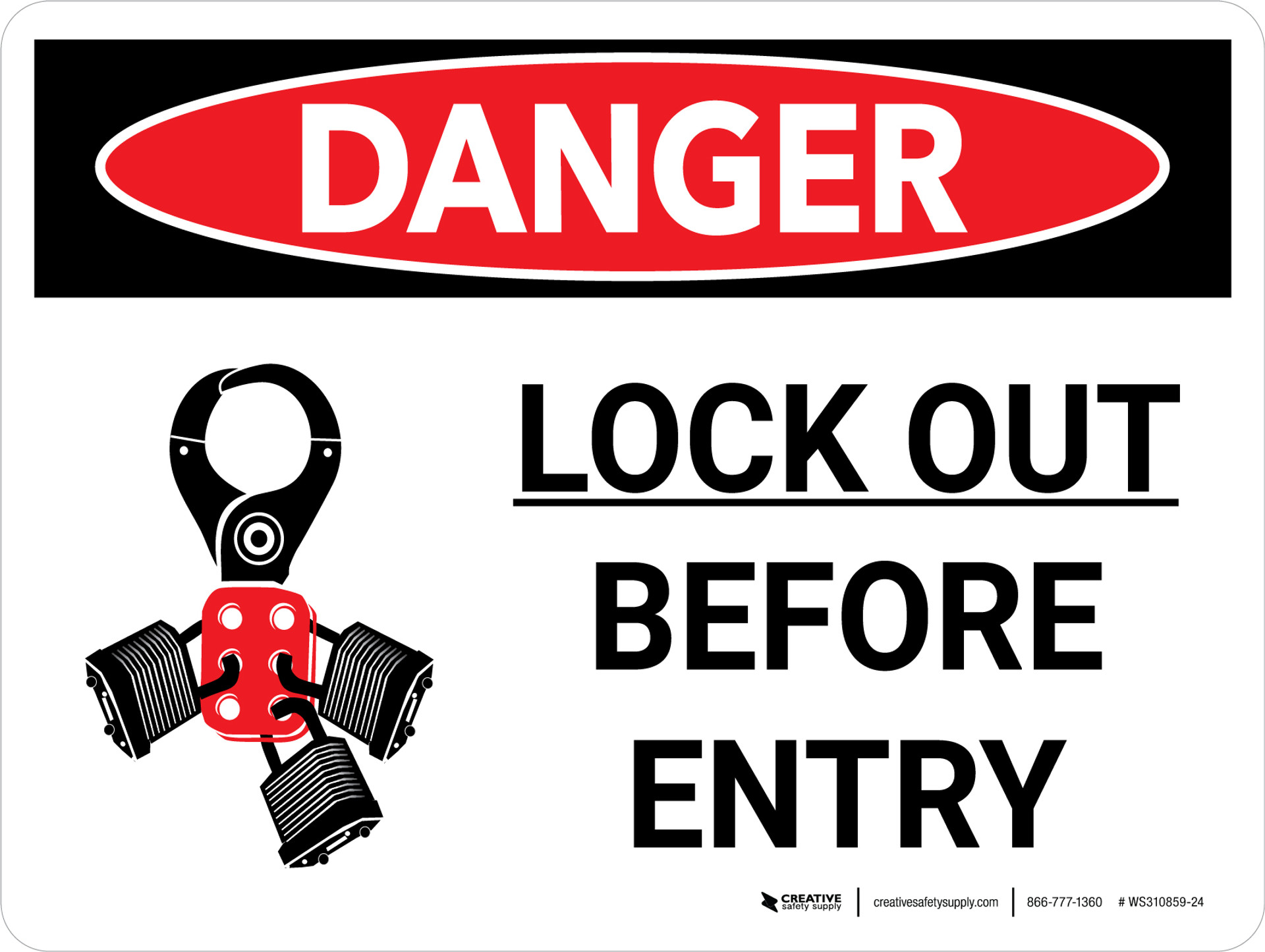
- Using tags without locks – Tags alone are insufficient unless lockout is not feasible.
- Poor lockout device maintenance – Broken hasps, illegible tags, or missing padlocks undermine the system.
- Lack of periodic inspections – OSHA requires annual audits of LOTO procedures.
Pro tip: Conduct surprise LOTO audits. Walk the floor during maintenance. Are locks applied? Are tags filled out? Is energy verified? Real-world checks catch real-world flaws.
Implementing LOTO: A Minimalist Workflow
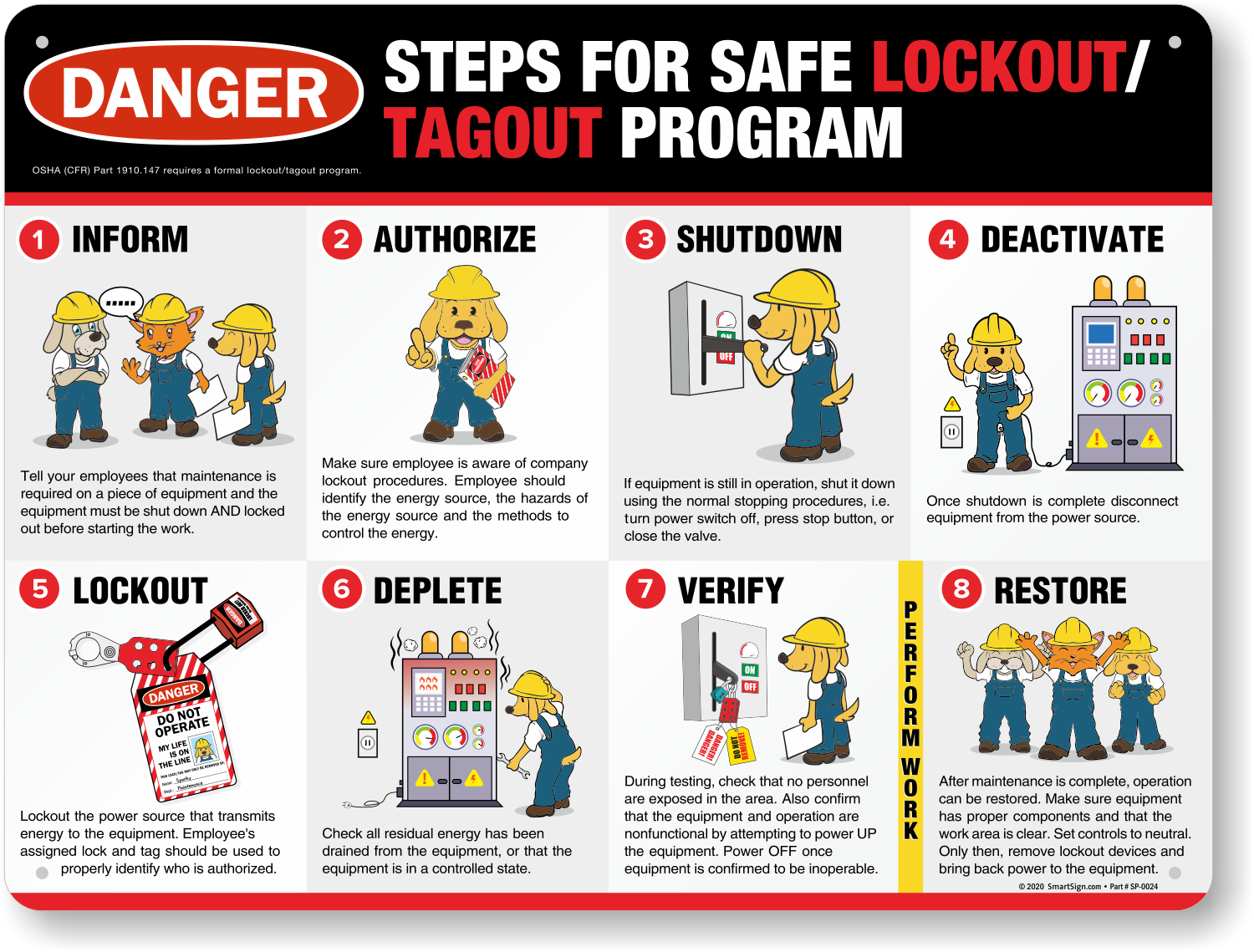
You don’t need a 50-page manual to start. Build around this 5-step cycle:
- Prepare – Identify energy sources and required procedures.
- Notify – Inform affected employees the shutdown is coming.
- Shut Down – Stop equipment using normal controls.
- Isolate & Lockout – Disconnect energy sources, apply locks and tags.
- Verify – Attempt to start the machine (safely) to confirm de-energization.
After work:
- Ensure all tools are removed
- Clear the area
- Remove locks only by the person who applied them
- Restart under controlled conditions
This process must be documented and machine-specific. A one-size-fits-all LOTO procedure is a compliance risk.
Final Word: LOTO Is Not a Choice—It’s a Condition of Safe Work
The question “When is lockout tagout required?” has a simple answer: whenever a worker could be injured by unexpected energy release during servicing or maintenance.
But simplicity doesn’t mean ease. It means vigilance. It means training that sticks. It means procedures that are followed—even when the line is down and production pressure mounts.
Every lock applied, every tag read, every verification test performed is a line drawn between safety and catastrophe.
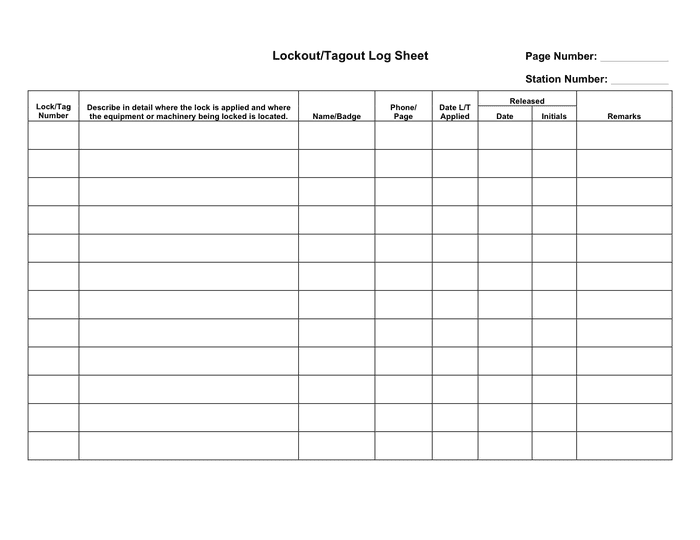
If your team is still guessing when LOTO applies, you’re already at risk. Define the moments. Train for them. Audit relentlessly. Because in the split second between off and on, the only thing that matters is the lock on the disconnect.
FAQ
Is LOTO required for routine cleaning? Only if cleaning involves removing guards or placing hands near danger zones. Routine cleaning with guards in place may not require LOTO if alternative protections exist.
Can I use a tag without a lock? Only if energy isolation cannot be locked. Tags alone are less reliable and require additional safety measures.
Who can remove a LOTO device? Only the authorized employee who applied it, unless under a controlled transfer procedure (e.g., shift change).
Does LOTO apply to corded hand tools? Generally no—if unplugged and under operator control. But if servicing the tool internally, LOTO principles still apply.
What if a machine has no lockable disconnect? You must either modify the equipment to accept a lock or implement an equivalent level of protection.
Are robots covered under LOTO? Yes. Robotic cells often have multiple energy sources and require full LOTO during maintenance.
Do I need LOTO for battery-powered equipment? Yes. Batteries store electrical and sometimes mechanical energy. They must be disconnected and isolated.
FAQ
What should you look for in When Is Lockout Tagout Required: A Complete Guide? Focus on relevance, practical value, and how well the solution matches real user intent.
Is When Is Lockout Tagout Required: A Complete Guide suitable for beginners? That depends on the workflow, but a clear step-by-step approach usually makes it easier to start.
How do you compare options around
When Is Lockout Tagout Required: A Complete Guide? Compare features, trust signals, limitations, pricing, and ease of implementation.
What mistakes should you avoid? Avoid generic choices, weak validation, and decisions based only on marketing claims.
What is the next best step? Shortlist the most relevant options, validate them quickly, and refine from real-world results.