Failure to control hazardous energy accounts for nearly 10% of serious accidents in manufacturing. Workers servicing machinery are often exposed to unexpected startup or release of stored energy—steam, hydraulic pressure, electrical charge, or mechanical tension. Lockout tagout (LOTO) procedures exist to prevent these incidents. But knowing why LOTO matters isn’t enough. What separates compliant workplaces from accident-prone ones is the quality and applicability of real-world lockout tagout procedures.
This article dives into practical, actionable examples of lockout tagout procedures—drawn from real industrial environments—to illustrate how effective energy control is implemented across sectors. These aren’t theoretical templates. They’re reflections of operational reality, with nuances that matter.
What Makes a Lockout Tagout Procedure Effective?
Before diving into examples, it’s critical to understand the anatomy of a reliable LOTO procedure. OSHA standard 29 CFR 1910.147 outlines the requirements, but effective procedures go beyond compliance. They are:
- Machine-specific: Not generic. Tailored to the equipment’s energy sources and controls.
- Step-by-step: Chronological, unambiguous, and executable by trained personnel.
- Visual when needed: Use of diagrams, photos, or color codes to clarify isolation points.
- Reviewed and updated: Reassessed after equipment modification or incident.
A weak LOTO procedure says: “Turn off machine and lock out.” A strong one says: “Shut down conveyor via E-stop, isolate main disconnect at Panel B3, verify zero energy using a CAT III multimeter, then apply personal lock and tag.”
Now, let’s examine how this plays out across industries.
1. Conveyor System Maintenance in a Packaging Plant
Conveyor systems appear simple but harbor multiple energy sources: electrical motors, gravity-fed movement, and sometimes pneumatic actuators.
Scenario: A technician must replace a drive belt on a high-speed packaging conveyor.
- LOTO Procedure Steps:
- Notify operations team of scheduled maintenance.
- Stop the conveyor using the emergency stop button.
- Locate and de-energize the main electrical disconnect (typically a breaker in a motor control center).
- Isolate pneumatic supply valves if air assist is used.
- Lock out the disconnect with a personal lock and affix a tag stating name, department, and reason for lockout.
- Attempt to restart the system via control panel to verify zero energy state (try-start test).
- Release any stored mechanical tension in the belt system.
- Proceed with repair.
- After completion, confirm area is clear, remove lock, and notify team.
Common Pitfall: Skipping the try-start test. Workers assume the disconnect is sufficient, but faulty breakers or misidentified panels can leave circuits live.
Pro Tip: Use lockout hasps when multiple technicians are involved. Each applies their own lock, ensuring nobody can restart until all are done.
2. Hydraulic Press Servicing in Automotive Manufacturing
Hydraulic presses store significant energy in accumulators even after power-down. A misstep here can crush limbs or worse.
Scenario: Die change on a 1,000-ton stamping press.

- LOTO Procedure Steps:
- Place the press in maintenance mode via HMI.
- Shut off main electrical supply at the disconnect switch.
- Close and lock hydraulic isolation valves to prevent fluid movement.
- Depressurize hydraulic accumulators using the manual bleed valve.
- Verify pressure is zero using a gauge.
- Lock out both electrical and hydraulic isolation points with individual locks.
- Tag all locks with technician details and time of lockout.
- Perform a functional check to confirm machine cannot cycle.
- Conduct die change under supervision.
- After work, inspect area, remove tools, release locks only after clearance.
Critical Detail: Stored energy in hydraulic systems requires active dissipation. Simply cutting power isn’t enough.
Limitation: Some older presses lack bleed valves. In such cases, procedures must include an extended dwell time and secondary verification.
3. Boiler Maintenance in a Chemical Processing Facility
Boilers involve thermal, pressure, and electrical energy. LOTO must address all three.
Scenario: Inspection of burner assembly on a natural gas-fired boiler.
- LOTO Procedure Steps:
- Shut down boiler via control panel and allow system to cool.
- Isolate main gas supply valve and lock in closed position.
- Close steam outlet and condensate return valves.
- Vent and purge steam lines to atmospheric pressure.
- Lock out main electrical disconnect for burner control system.
- Test for zero gas presence using a combustible gas detector.
- Apply personal locks and tags at all isolation points.
- Confirm isolation with pressure gauges and electrical testing.
- Begin inspection.
Safety Note: Thermal energy lingers. Procedures must specify minimum cooldown times—often 4+ hours—before work begins.
Industry Variation: In continuous-process plants, partial shutdowns are common. LOTO procedures must clearly distinguish between isolated components and active systems nearby.
4. Overhead Crane Repair in a Steel Mill
Overhead cranes pose fall, impact, and electrical hazards. Their height and mobility complicate LOTO.
Scenario: Replacing a hoist motor on a bridge crane.
- LOTO Procedure Steps:
- Position crane at designated maintenance bay.
- Deactivate crane via cab controls and remove pendant control.
- Isolate power at the runway disconnect (often a plug or switch along the rail).
- Lock out disconnect and tag with maintenance details.
- Verify zero energy by attempting to operate controls.
- Install mechanical stops or rail clamps to prevent movement.
- Lock out hoist brake release mechanism if present.
- Begin repair.
Why It’s Different: Unlike fixed machinery, cranes are mobile. Locking power isn’t enough—physical restraint is essential to prevent drift due to wind or rail slope.
Checklist Addition: Include visual inspection of rail clamps and their certification status as part of the procedure.
5. Electrical Panel Upgrades in a Data Center
Even in high-tech environments, LOTO is non-negotiable. Downtime risks must never override safety.
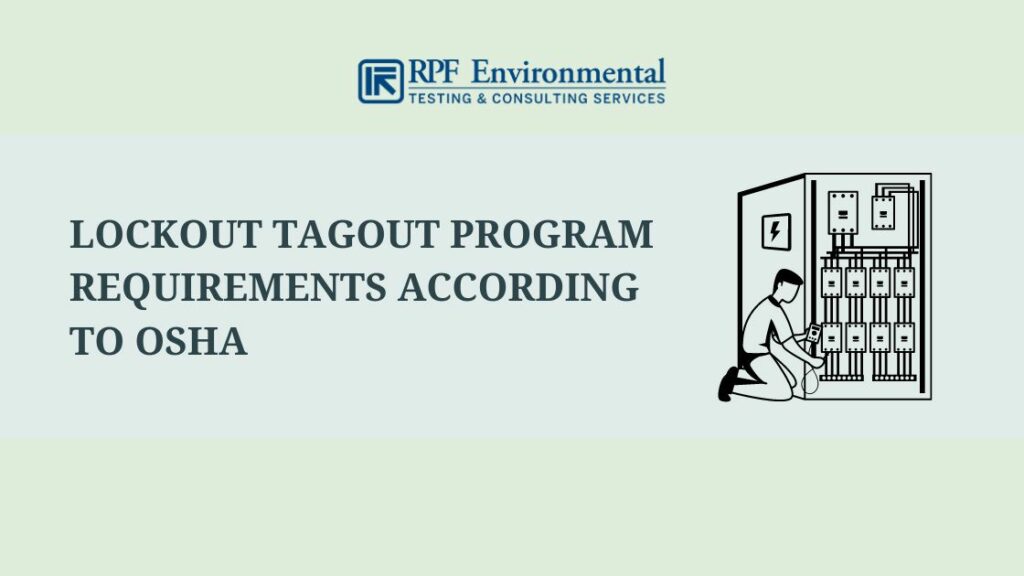
Scenario: Upgrading circuit breakers in a 480V electrical distribution panel.
- LOTO Procedure Steps:
- Coordinate with facility manager to schedule outage.
- Switch off main breaker and all feeder breakers.
- Lock out main disconnect with a padlock and tag.
- Test for absence of voltage using a properly rated voltage tester (phase-to-phase and phase-to-ground).
- Apply safety grounds if working on bus bars.
- Confirm nearby panels are clearly marked to avoid confusion.
- Perform upgrades.
- Remove tools, inspect connections, remove grounds, then unlock and re-energize.
Common Error: Assuming a breaker is off because it’s in the “off” position. Faulty mechanisms can leave contacts closed. Verification is mandatory.
Best Practice: Use test-before-touch protocols. Document testing steps directly in the LOTO log.
Industry-Specific LOTO Variations: Key Insights
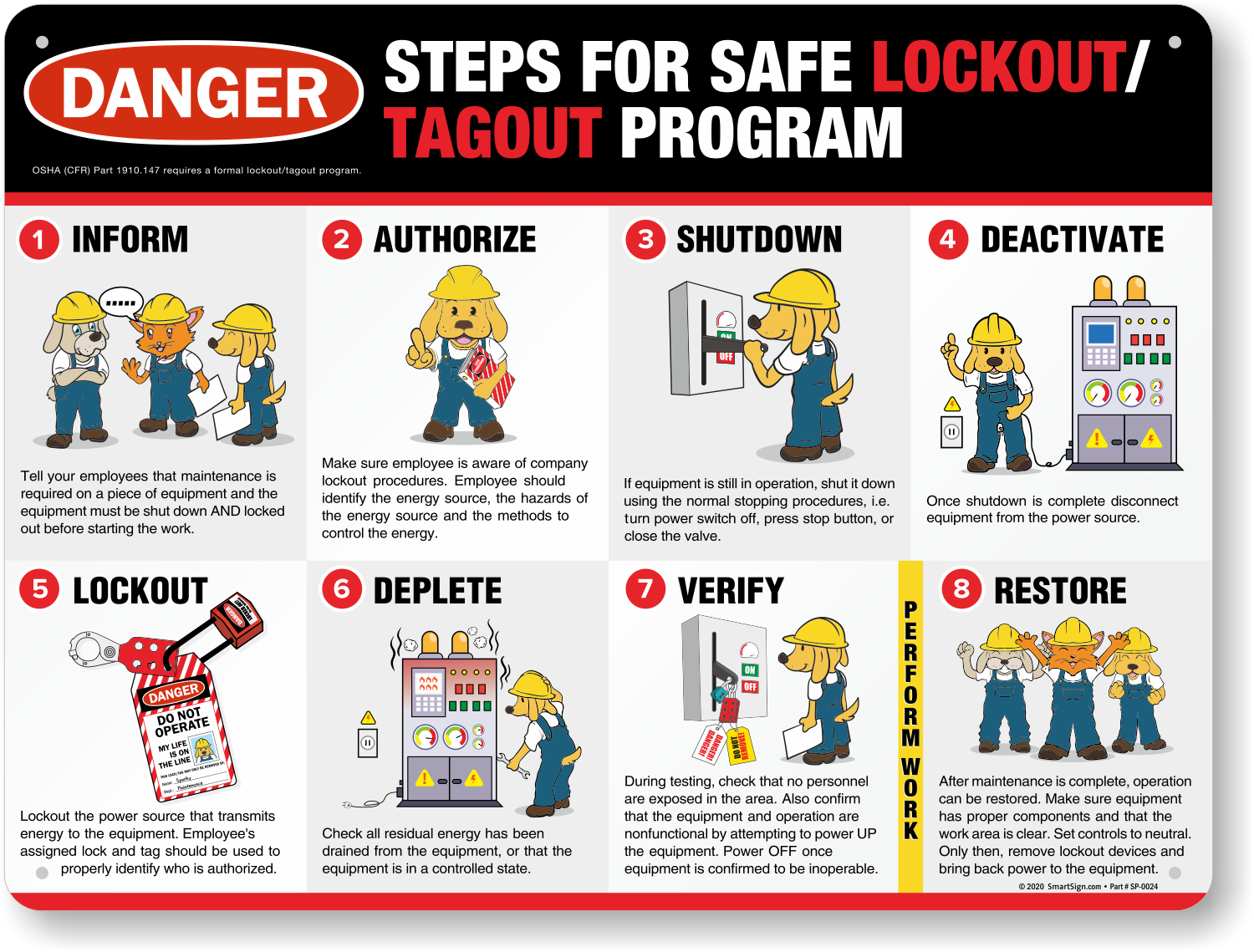
While the core LOTO steps remain consistent—prepare, shut down, isolate, lockout, verify, perform work, restore—implementation varies.
| Industry | Primary Energy Hazards | LOTO Focus |
|---|---|---|
| Food Processing | Rotating blades, steam, gravity conveyors | Sanitation lockouts, multiple isolation points |
| Pharmaceuticals | Sterilization cycles, vacuum systems | Validation during re-energization |
| Mining | Conveyor belts, crushers, high-pressure air | Remote isolation, environmental exposure |
| Healthcare | Medical gas systems, sterilizers | Shared systems with patient impact |
One size doesn’t fit all. A hospital’s autoclave LOTO differs from a factory’s because restarting affects patient care. Procedures must reflect operational context.
Common Mistakes That Undermine LOTO Effectiveness
Even with written procedures, failure often stems from human and organizational gaps.
- Group Lockout Confusion: Multiple workers, one lock. Solution: Use hasps so each technician applies their own lock.
- Tag Reliance Over Locks: Tags are warnings; locks are barriers. Never rely on tags alone.
- Improper Verification: Skipping the try-start or voltage test.
- Inadequate Training: Workers follow steps without understanding energy types.
- Absent Procedure Updates: After machine retrofit, old LOTO steps may miss new energy sources.
A LOTO procedure is only as strong as its weakest execution point.
How to Develop Your Own LOTO Procedures
Start with a risk assessment of each machine. Identify every energy source: electrical, mechanical, hydraulic, pneumatic, chemical, thermal, gravitational.
Then, build the procedure using this framework:
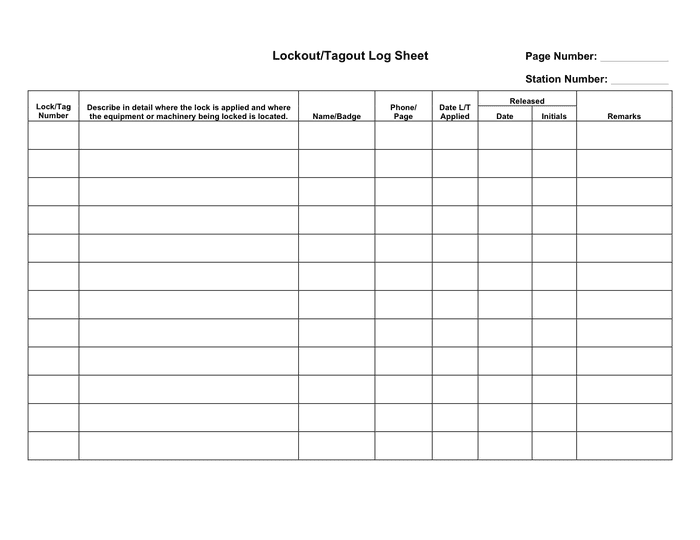
- Machine Identification: Name, location, model.
- Authorized Personnel: Who can perform the LOTO.
- Energy Sources: List all with isolation methods.
- Step-by-Step Shutdown: Clear, ordered instructions.
- Isolation Points: Exact locations (e.g., “Circuit Breaker #7 in MCC Room 2”).
- Lockout Devices: Type of lock, hasp, or valve lock used.
- Verification Method: How zero energy is confirmed.
- Restoration Steps: Controlled restart protocol.
Include photos or diagrams. Store procedures near the machine or in an accessible digital system.
Final Thoughts: LOTO Is a Culture, Not Just a Procedure
The best examples of lockout tagout procedures share one trait: they’re embedded in a safety culture. Workers don’t bypass LOTO because it’s inconvenient. Supervisors don’t pressure teams to “just quick-fix it.” Every lock applied is a statement: Safety is non-negotiable.
Use these examples as inspiration, but tailor them. Audit regularly. Train relentlessly. And never assume a procedure is “done.” Machines evolve. So must your LOTO.
Implement one procedure this week if you haven’t. Review one that’s outdated. Your most valuable asset isn’t the machine—it’s the person maintaining it.
FAQ
What should you look for in Examples of Lockout Tagout Procedures You Need to Know? Focus on relevance, practical value, and how well the solution matches real user intent.
Is Examples of Lockout Tagout Procedures
You Need to Know suitable for beginners? That depends on the workflow, but a clear step-by-step approach usually makes it easier to start.
How do you compare options around Examples of Lockout Tagout Procedures You Need to Know? Compare features, trust signals, limitations, pricing, and ease of implementation.
What mistakes should you avoid? Avoid generic choices, weak validation, and decisions based only on marketing claims.
What is the next best step? Shortlist the most relevant options, validate them quickly, and refine from real-world results.