Machines don’t warn you when they’re energized. That’s why lockout tagout safety signs exist—to speak when equipment can’t. In industrial environments, a single misstep during maintenance can lead to catastrophic injury or death. According to the U.S. Bureau of Labor Statistics, hundreds of workers are injured annually in accidents involving unexpected machine startup—many of which could have been prevented with proper lockout tagout (LOTO) procedures and visible signage.
These signs aren’t just regulatory checkboxes. They’re frontline communication tools that bridge the gap between procedure and practice. When a technician sees a bold “Danger: Do Not Operate” tag on a control panel, it’s not just a reminder—it’s a legal and physical barrier to action.
This guide dives deep into the role, design, placement, and real-world impact of lockout tagout safety signs, helping you build a safer, more compliant workplace.
What Are Lockout Tagout Safety Signs?
Lockout tagout safety signs are visual warnings used during maintenance or servicing of machines and equipment to indicate that energy sources are isolated and operation is prohibited. They work in tandem with physical locks and tags as part of a formal energy control program.
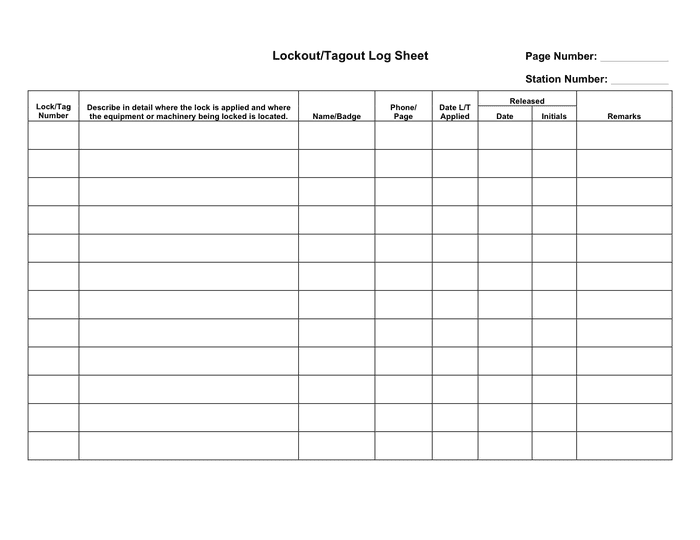
While lockout devices physically prevent energy re-energization (e.g., padlocks on circuit breakers), tags and signs communicate the why and who. A sign might read “Maintenance in Progress – Authorized Personnel Only” or “Locked Out by: John Doe, ID#1234.” This transparency ensures accountability and reduces the risk of accidental re-energization.
The Legal Foundation: OSHA 1910.147
The Occupational Safety and Health Administration (OSHA) standard 1910.147, The Control of Hazardous Energy (Lockout/Tagout), mandates the use of warning signs and tags. Key requirements include:
- Tags must be durable enough to withstand the environment.
- Signs must be standardized within the facility.
- They must clearly indicate that equipment is not to be operated.
- Tags must include the name of the authorized employee who applied the lockout.
Failure to comply can result in fines exceeding $15,000 per violation—and more importantly, increased risk of injury or fatality.
Why Lockout Tagout Signs Matter Beyond Compliance
Compliance is the baseline. The real value of LOTO signs lies in their ability to shape behavior, reinforce protocols, and create a culture of safety.
Preventing Human Error
Most LOTO failures stem from simple mistakes: someone bypasses a lock, removes a tag prematurely, or misunderstands the status of a machine. Clear, unambiguous signs reduce ambiguity.
For example, in a 2020 incident at a Midwest manufacturing plant, a conveyor belt was reactivated during maintenance because the LOTO tag was faded and partially obscured by grease. The worker suffered severe hand injuries. A high-visibility, weather-resistant sign could have prevented the tragedy.
Bridging Language and Literacy Gaps
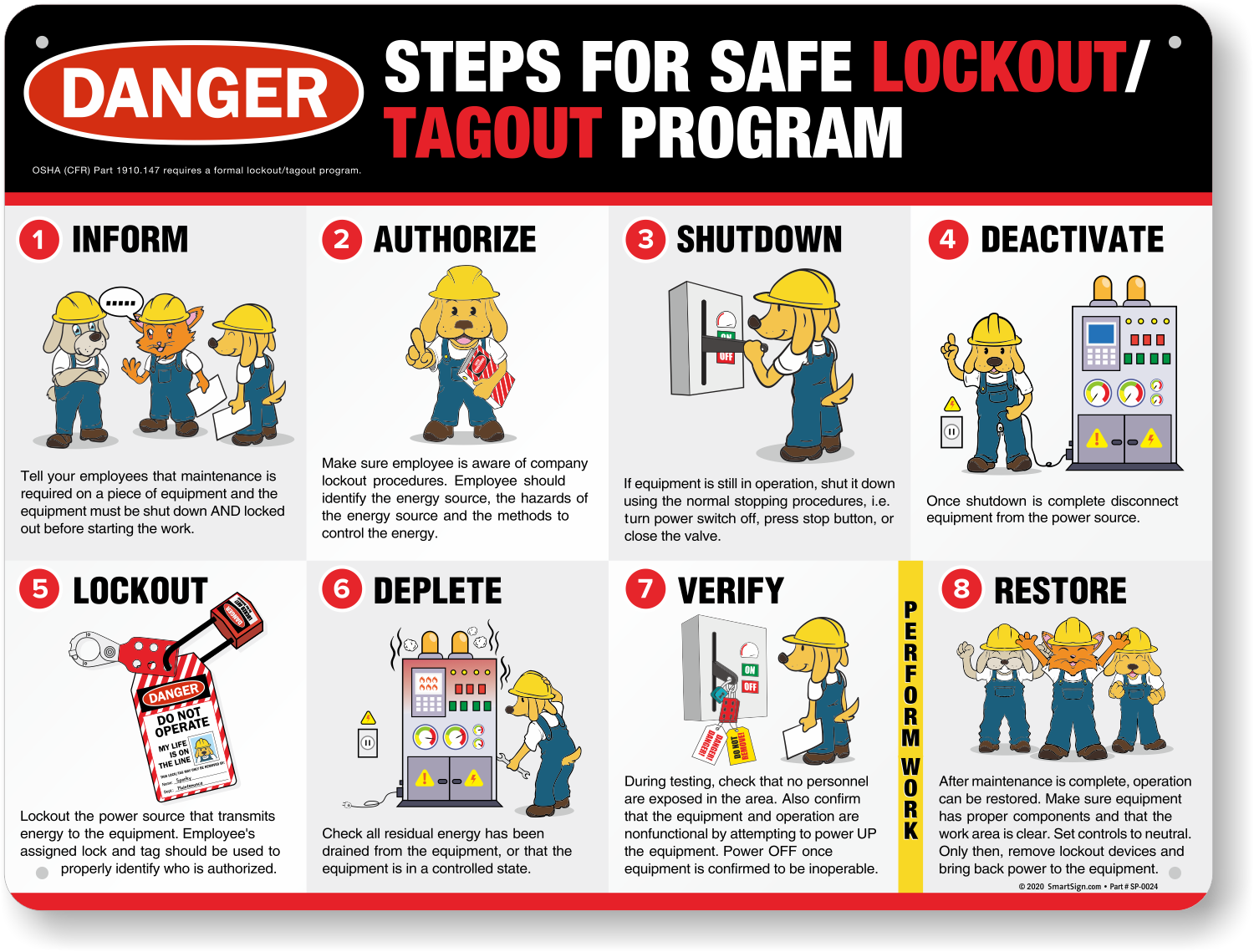
In diverse workplaces, not all employees read English fluently. Effective LOTO signs use universal symbols—like a padlock icon or prohibition circle—to convey meaning instantly. ANSI Z535.2 standards recommend combining text with pictograms for maximum clarity.
A chemical processing facility in Texas reduced miscommunication incidents by 62% after switching to bilingual (English/Spanish) LOTO tags with intuitive icons.
Design Principles for Effective LOTO Safety Signs
Not all signs are created equal. A poorly designed sign—too small, too vague, or too faded—can be worse than none at all.
Use the Right Signal Word Hierarchy
OSHA and ANSI define specific signal words based on hazard severity:
| Signal Word | Color | Use Case |
|---|---|---|
| DANGER | Red | Immediate hazards that can cause death or serious injury |
| WARNING | Orange | Potential hazards that could result in serious injury |
| CAUTION | Yellow | Hazards that may cause minor or moderate injury |
For LOTO applications, “DANGER” is most appropriate—it signals that unauthorized operation poses an imminent threat.
Include Critical Information
A high-performing LOTO sign should include:
- Clear instruction (e.g., “Do Not Start,” “Do Not Open”)
- Authorized employee name and ID
- Date and time of lockout
- Reason for lockout (e.g., “Motor Replacement”)
- Contact information (if applicable)
Material and Durability
In harsh environments—chemical plants, outdoor facilities, food processing units—signs must resist:
- UV degradation
- Moisture and corrosion
- Chemical exposure
- Physical abrasion
Aluminum, polyester, and vinyl substrates with UV-resistant inks are ideal. Laminated tags last longer in high-wear areas.
Common Mistakes That Undermine LOTO Sign Effectiveness
Even compliant signs fail when implementation falters. Here are frequent pitfalls:
1. Vague or Generic Messaging
“Out of Order” says nothing about energy isolation. Use specific language: “Locked Out – Do Not Energize.”
2. Poor Placement
A LOTO sign buried behind a pipe or mounted at ground level won’t be seen. Signs must be visible at all operator control points—buttons, switches, valves.
3. Reusing Tags
Tags are single-use. Reusing a tag with a different worker’s name creates confusion and violates OSHA rules.
4. Ignoring Environmental Conditions
Paper tags in wet environments disintegrate. Fabric tags near heat sources melt. Match the material to the environment.
5. Inconsistent Formatting
If one department uses red tags and another uses yellow, confusion arises. Standardize colors, fonts, and layout across the facility.
Where and How to Place LOTO Signs for Maximum Impact
Placement is as critical as design. A sign only works if it’s seen at the right time and place.
Key Locations for LOTO Signage
- Energy-isolating devices (circuit breakers, disconnect switches)
- Control panels and operator stations
- Valves and actuators for pneumatic/hydraulic systems
- Entrances to restricted zones during maintenance
Best Practices for Installation
- Mount signs at eye level whenever possible.
- Use zip ties or non-reusable fasteners to prevent tampering.
- Pair signs with physical locks—never rely on signage alone.
- Conduct weekly audits to check for damage or missing signs.
In a power generation plant, engineers added illuminated LOTO signs near turbine controls. The added visibility reduced near-miss incidents by 45% during night shifts.
Real-World Use Cases: How LOTO Signs Save Lives
Case 1: Automotive Assembly Line
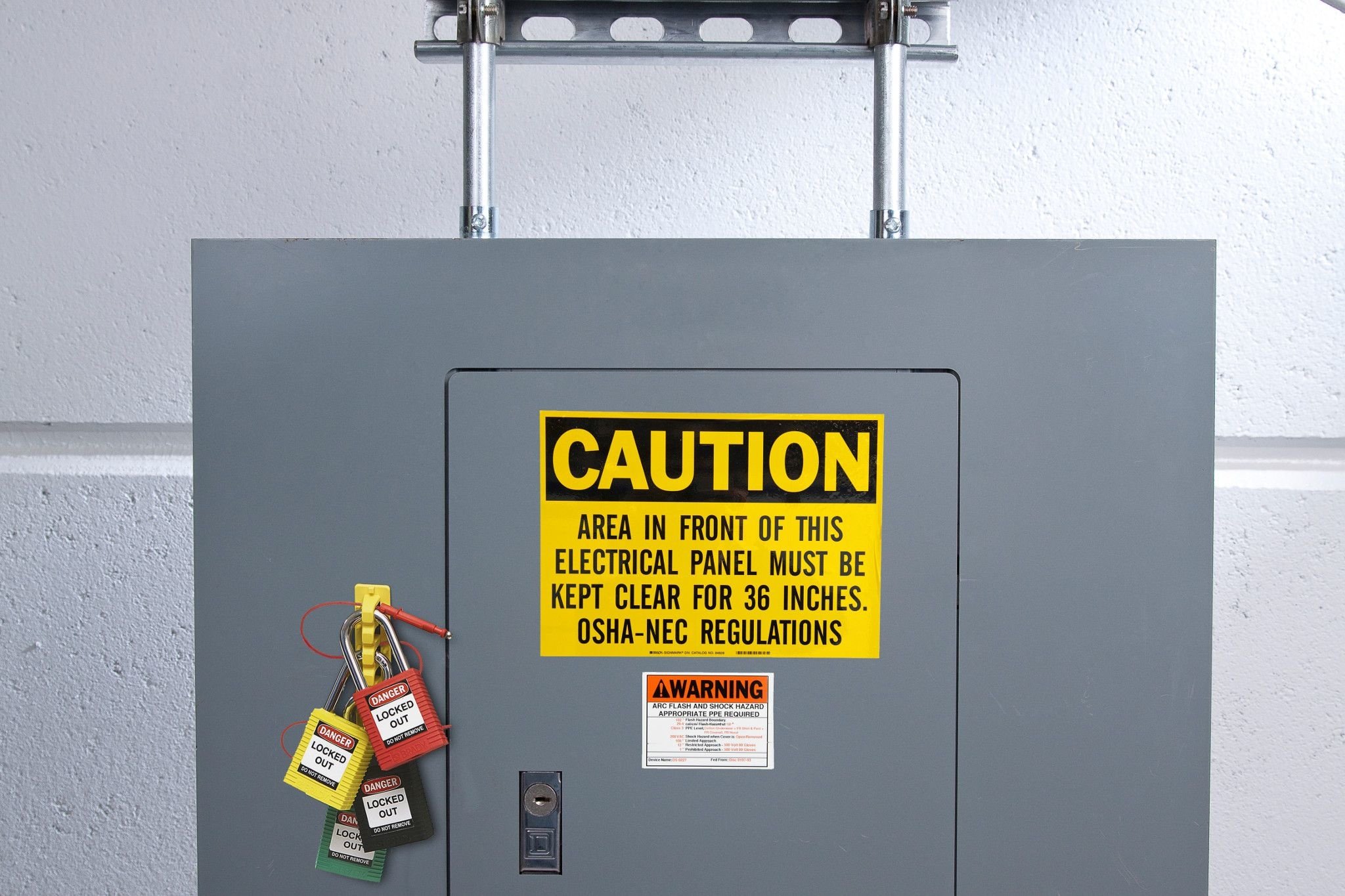
At a Detroit auto plant, a robot arm was being reprogrammed. The technician applied a lock and tag to the main control panel with the message: “Robot Arm Calibration – Do Not Power On – Jane Smith, ID#889.” A supervisor attempted to restart the line early but stopped upon seeing the tag. A collision was avoided.
Case 2: Wastewater Treatment Facility
During pump maintenance, a contractor placed a laminated LOTO sign on a submerged valve. The sign survived 48 hours underwater and was clearly legible when retrieved. Without it, the system could have been pressurized prematurely.
Case 3: Food Processing Plant
After switching to magnetic-backed LOTO signs, a bakery reduced setup time between maintenance cycles. Technicians could quickly apply and remove signs without tools, while still maintaining compliance.
These examples show that effective LOTO signage isn’t just about safety—it also improves efficiency and accountability.
Choosing the Right LOTO Signs: Materials, Styles, and Suppliers
Not all signs deliver the same performance. Choose based on your environment and workflow.
| Product | Material | Best For | Pros | Cons |
|---|---|---|---|---|
| Polyester Tags | Durable polymer | Wet or chemical environments | Resists tearing, chemicals, UV | Higher initial cost |
| Aluminum Signs | Lightweight metal | Permanent installations | Long-lasting, weatherproof | Less flexible for temporary use |
| Vinyl Tags | Flexible plastic | General indoor use | Affordable, easy to write on | Can degrade in sunlight |
| Magnetic Signs | Steel-backed with magnet | Control panels, switchgear | Reusable, tool-free install | May not adhere to non-metal surfaces |
| Self-Laminating Tags | Dual-layer plastic | High-abrasion zones | Seals writing from damage | Requires careful application |
Top suppliers include Grainger, Brady, Seton, Lockout Safety Supply, and Master Lock. Many offer customizable templates that align with OSHA and ANSI standards.
Integrating LOTO Signs Into a Comprehensive Safety Program
Signs alone don’t create safety. They’re one element of a larger energy control system.
Steps to a Robust LOTO Program
- Develop written procedures for each piece of equipment.
- Train all authorized and affected employees annually.
- Conduct periodic inspections (at least yearly) of LOTO practices.
- Use standardized signage across all departments.
- Audit and update procedures after equipment changes.
A chemical manufacturer in Louisiana cut LOTO-related incidents to zero over three years by combining visual management (including signs) with biannual drills and peer-led safety reviews.
Final Thoughts: Make Safety Visible, Not Just Verbal
Lockout tagout safety signs are more than regulatory artifacts—they’re daily guardians of human life. In high-risk environments, clarity saves time, prevents injury, and builds a culture where safety is visible, tangible, and non-negotiable.
Don’t wait for an incident to audit your signage. Walk your facility today. Are your LOTO signs visible? Durable? Understood by every worker? If not, update them now. The few minutes it takes to replace a worn tag could prevent a lifetime of regret.
Equip your team with the right signs. Train them to trust the message. And make sure every machine that powers down does so with a clear, unmistakable warning: Stay locked. Stay safe.
Frequently Asked Questions
What’s the difference between a LOTO tag and a LOTO sign? A tag is typically attached directly to a lock or energy-isolating device and includes personal information. A sign is often fixed or mounted nearby and provides broader warnings.
Can I use only signs without locks? No. OSHA requires physical lockout devices. Tags and signs are supplementary—they communicate but don’t isolate energy.
Do LOTO signs need to be bilingual? Not required by OSHA, but highly recommended in multilingual workplaces to ensure understanding.
How long can a LOTO tag remain in place? Only for the duration of the maintenance. Tags must be removed by the same authorized employee who applied them.
Are digital LOTO signs compliant? Emerging digital systems exist, but OSHA currently requires durable, tamper-resistant physical tags and signs in most cases.
Can I reuse a LOTO tag? No. Tags are single-use items. Reuse creates confusion and violates safety protocols.
Who is responsible for placing LOTO signs? Authorized employees—those trained to recognize hazards and implement energy control procedures.
FAQ
What should you look for in Lockout Tagout Safety Signs: Your Ultimate Guide to Compliance? Focus on relevance, practical value, and how well the solution matches real user intent.
Is Lockout Tagout Safety Signs: Your Ultimate Guide to Compliance suitable for beginners? That depends on the workflow, but a clear step-by-step approach usually makes it easier to start.
How do you compare options around Lockout Tagout Safety Signs: Your Ultimate Guide to Compliance? Compare features, trust signals, limitations, pricing, and ease of implementation.
What mistakes should you avoid? Avoid generic choices, weak validation, and decisions based only on marketing claims.
What is the next best step? Shortlist the most relevant options, validate them quickly, and refine from real-world results.