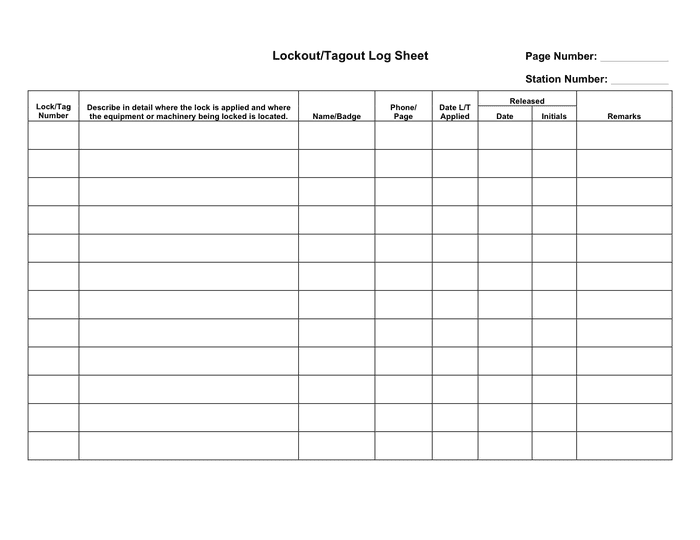
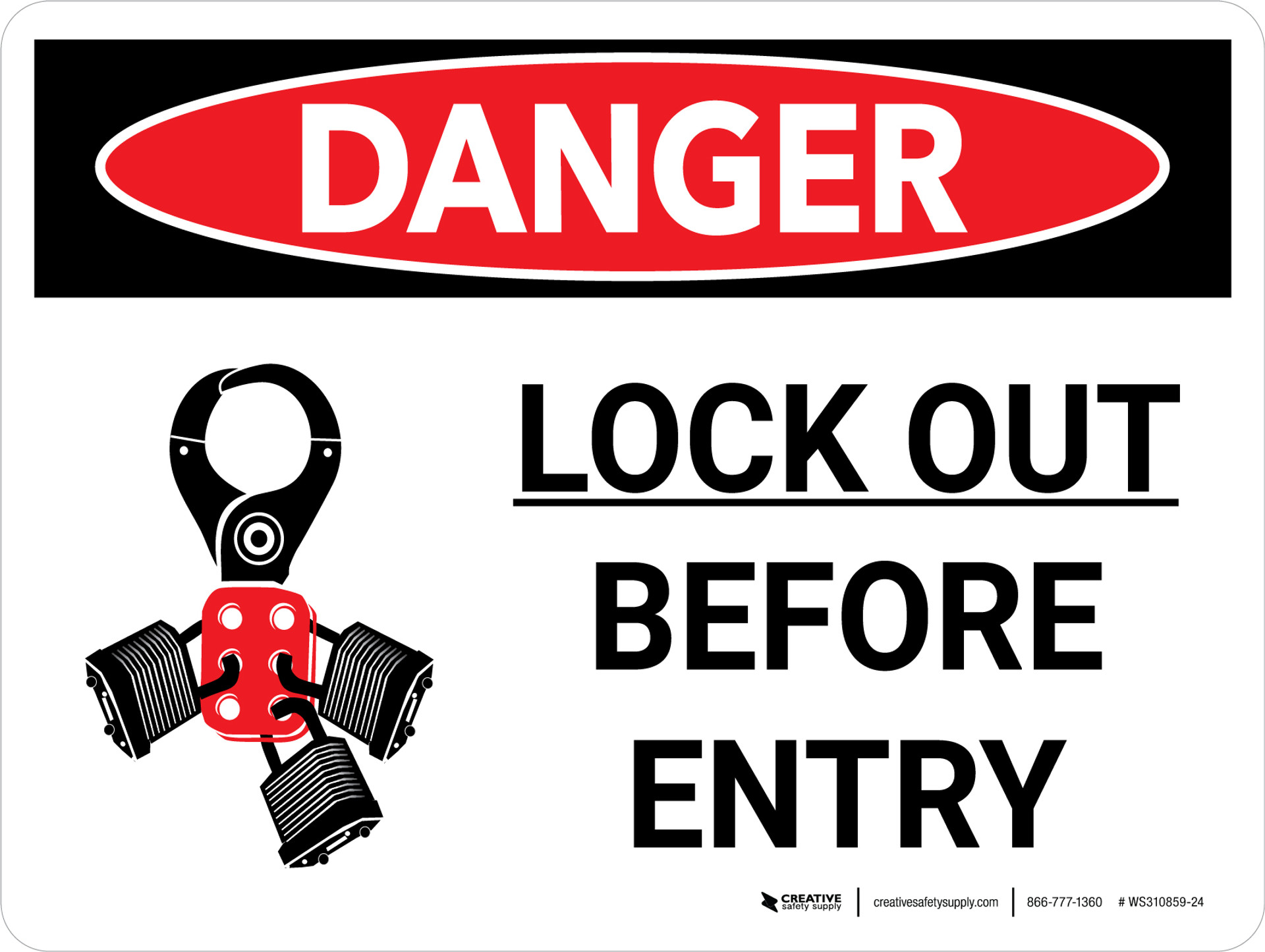
Every year, preventable industrial accidents occur because machinery is serviced while still energized. Workers assume a machine is safe—only to face catastrophic injury when unexpected startup happens. At the heart of preventing these incidents is a well-documented lockout tagout policy PDF. It’s not just paperwork—it’s a legal requirement and a frontline defense against serious harm.
A lockout tagout policy PDF serves as the blueprint for your energy control program. It outlines procedures, assigns responsibilities, and ensures consistency across shifts and teams. Whether you’re in manufacturing, maintenance, or facility operations, having a clear, accessible, and up-to-date PDF version of your LOTO policy is non-negotiable for both safety and compliance.
This guide walks through what should be in your lockout tagout policy PDF, how to create or customize one, and where to get reliable templates—plus real-world pitfalls to avoid.
What a Lockout Tagout Policy PDF Actually Includes
Contrary to what some believe, a lockout tagout policy PDF isn't just a scanned page with signatures. It's a structured document that aligns with OSHA 29 CFR 1910.147 and includes several critical components:
1. Purpose and Scope Clearly defines why the policy exists and which equipment, departments, and employees it covers. For example: > "This policy applies to all maintenance, cleaning, and repair activities on production machinery capable of hazardous energy release, including mechanical, electrical, hydraulic, and pneumatic systems."
2. Definitions of Key Terms Avoid confusion by defining terms such as:
- Authorized employee – someone trained to implement lockout procedures
- Affected employee – someone who operates or uses equipment but doesn’t service it
- Energy-isolating device – a disconnect switch, valve, or block that stops energy flow
- Group lockout – procedures when multiple workers service the same machine
3. Roles and Responsibilities Who does what?
This section assigns accountability:
- Supervisors ensure training and enforcement
- Authorized employees apply locks and tags
- Maintenance leads verify zero energy before work begins
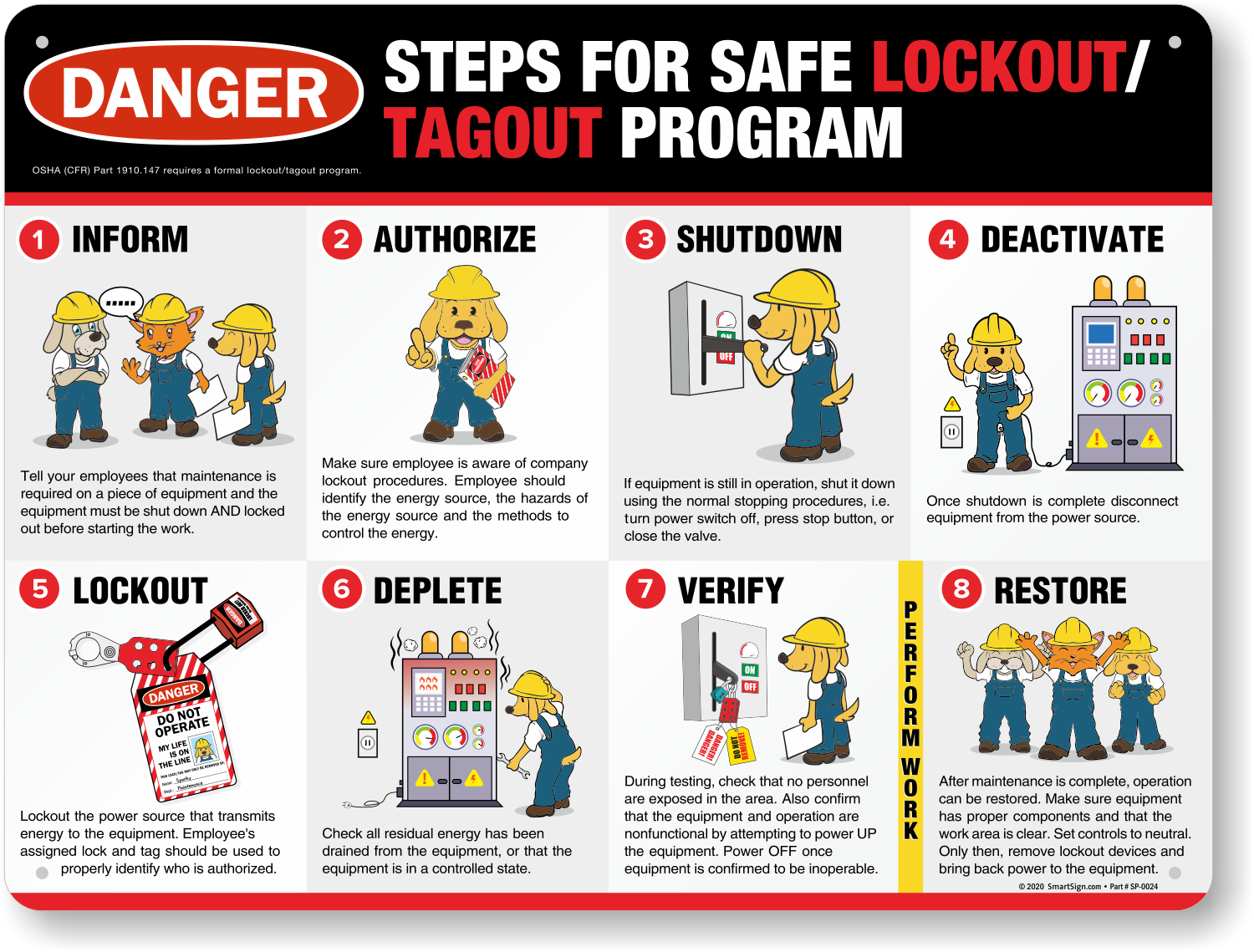
4. Step-by-Step Procedures The core of the document. Must include:
- Notification of shutdown
- Machine isolation (e.g., flip breaker, close valve)
- Application of lock and tag
- Release of stored energy (e.g., bleed air lines, drain capacitors)
- Verification of de-energization
- Removal procedures (only by the person who applied the lock)
Use bullet points or numbered lists for clarity. A poorly written procedure leads to skipped steps.
5. Training and Retraining Requirements Mention initial training, annual refreshers, and retraining after procedure changes or incidents.
6. Periodic Inspections OSHA requires audits at least annually. The PDF should specify how these are conducted—e.g., observing an employee performing LOTO and reviewing documentation.
7. Documentation and Recordkeeping List what records are kept: training logs, inspection reports, incident investigations. Include retention periods.
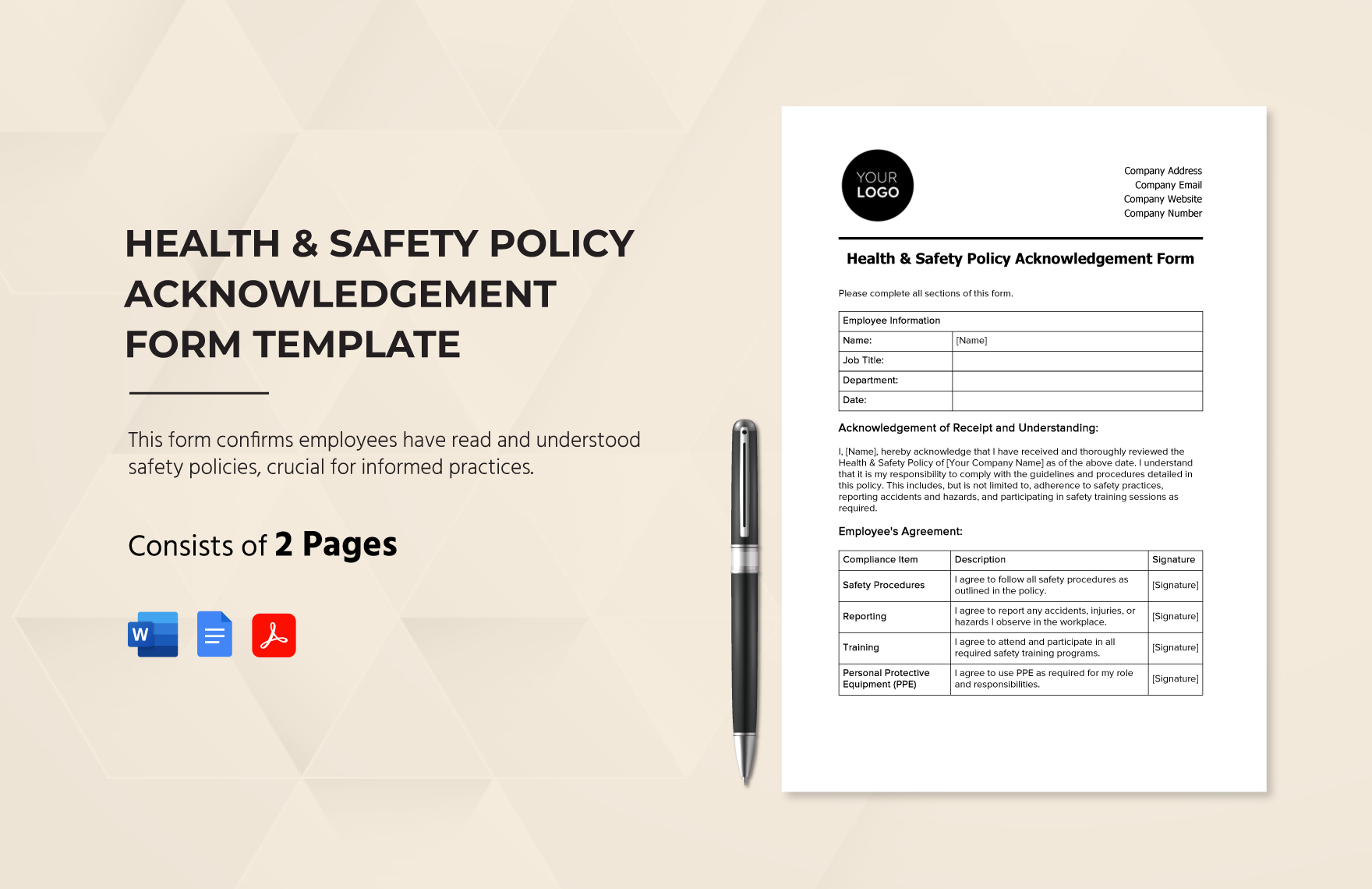
Why a PDF Is the Standard Format for LOTO Policies
You could publish your policy on a website or intranet, but PDF remains the preferred format for lockout tagout policies—and for good reasons:
- Universal accessibility: Opens on nearly any device, even offline
- Tamper-resistant: Digital signatures and password protection prevent unauthorized edits
- Print-friendly: Technicians often need hard copies near workstations
- Consistent formatting: Unlike Word docs, PDFs render the same across platforms
However, don’t just convert a draft to PDF and call it done. A useful LOTO PDF must be: - Searchable (with proper OCR or text layer) - Bookmarked for navigation - Mobile-optimized (font size, layout) - Updated with version control (e.g., “Rev 3.1 – Updated 03/2025”)
Storing it on a shared drive with vague filenames like “safety policy.pdf” defeats the purpose. Use clear naming: LOTO_Policy_Main_Facility_Rev3.pdf
Real-World Use Cases of a LOTO Policy PDF
A PDF isn’t just for compliance officers. Here’s how different roles use it daily:
Maintenance Technicians Before servicing a conveyor system, a technician pulls up the LOTO PDF on a tablet. They follow the exact sequence for isolating motor drives and confirm bleed-off points. No memory games—just a trusted reference.
Safety Auditors During an OSHA inspection, the auditor requests the current LOTO policy. The safety manager opens the PDF, shows the latest revision date, training logs, and recent audit results—all hyperlinked within the document.
New Hires in Onboarding During orientation, HR shares the LOTO PDF via email. The employee reads the policy, signs a confirmation page embedded in the file, and completes a quiz based on its content.
Incident Investigation Teams
After a near-miss, investigators compare what happened to the written procedure. Discrepancies reveal gaps—like missing verification steps—that lead to policy updates.
Common Mistakes in Lockout Tagout Policy PDFs
Even companies with LOTO programs make errors that undermine their effectiveness. Avoid these:
1. Using Generic Templates Without Customization Downloading a free “LOTO policy PDF” online and using it as-is is risky. Every facility has unique machines and energy types. A boiler room in a hospital needs different procedures than a CNC shop.
2. Outdated or Unversioned Documents A 2018 PDF still floating on the network? That’s a red flag. If procedures have changed but the PDF hasn’t, employees follow obsolete steps.
3. Overlooking Multilingual Needs In diverse workplaces, a PDF in English only creates liability. Include translated sections or link to multilingual addenda.
4. Missing Visual Aids Text-heavy PDFs are hard to follow under pressure. Add diagrams showing lock placement, flowcharts for group lockout, or photos of correct tag usage.
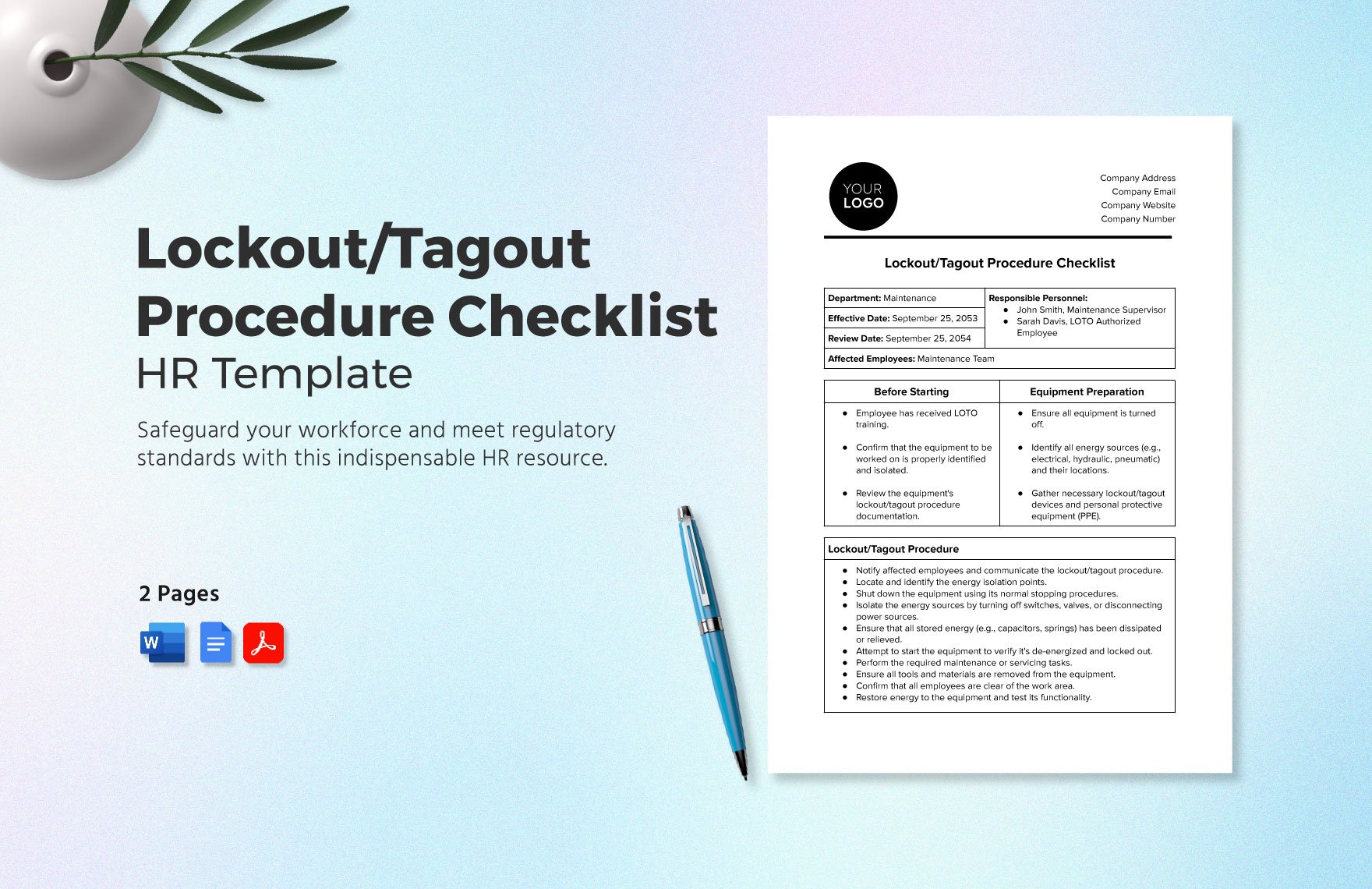
5. No Clear Revision or Approval Trail Who approved this? When? Where’s the sign-off? Always include an approval page with names, titles, and dates.
Where to Get Reliable Lockout Tagout Policy PDF Templates
You don’t need to build from scratch. But choose templates wisely.
Here are 5 reputable sources for customizable LOTO policy PDFs:
| Source | Features | Best For |
|---|---|---|
| OSHA.gov | Basic framework, compliant with 1910.147 | Companies starting from zero |
| National Safety Council (NSC) | Editable templates, training modules | Mid-sized organizations |
| SafetyCulture (iAuditor) | Digital-ready PDFs, mobile checklist integration | Tech-forward teams |
| Creative Safety Supply | Industry-specific templates (food, pharma, auto) | Niche manufacturing |
| EHS Insight | Full LOTO program suite with audit tools | Enterprise safety programs |
Pro Tip: Use these as starters—but always add site-specific details. For example, include photos of actual disconnects in your facility or reference internal work order numbers.
How to Customize Your LOTO Policy PDF
A good PDF evolves with your operations. Here’s how to tailor it:
- Walk the Floor
- Visit every machine covered under the policy. Note energy sources, isolation points, and stored energy risks.
- Interview Technicians
- Ask: “What’s confusing about the current procedure?” Frontline feedback reveals gaps.
- Map Procedures to Machines
- Create one LOTO procedure per machine or equipment group. Link them in the master policy PDF.
- Add Equipment-Specific Attachments
- Include appendices with lockout sequence diagrams, photos of lock points, or torque specs for bleed valves.
- Integrate with Other Systems
- Reference your permit-to-work system, confined space entries, or PPE requirements where relevant.
- Review and Update Annually
- Schedule a formal review. Involve safety officers, union reps, and maintenance leads.
Ensuring Your LOTO Policy PDF Is Actually Used
The best-written policy fails if no one reads it. Drive adoption with these tactics:
- Embed in digital work orders: Technicians must acknowledge they’ve reviewed the LOTO PDF before starting a job.
- Post QR codes near machines: Scan to pull up the PDF instantly.
- Use in training modules: Turn sections into quizzes or role-play scenarios.
- Anchored in audits: During inspections, ask employees to recite key steps from memory—then let them check the PDF.
Culture matters more than the document. When workers see management following LOTO rigorously, compliance becomes habit.
Final Thoughts: Your LOTO Policy PDF Is a Living Document
A lockout tagout policy PDF isn’t a one-time compliance box to check. It’s a living safety instrument—updated with new equipment, revised after incidents, and used daily to protect lives.
Don’t hide it in a folder labeled “Compliance.” Pin it, share it, test it, and improve it.
Download a template. Walk your facility. Talk to your team. Build a LOTO policy PDF that’s not just OSHA-ready—but actually used.
The difference between a near-miss and a fatality often comes down to one worker having the right instructions in hand. Make sure it’s yours.
Frequently Asked Questions
What should be included in a lockout tagout policy PDF? A complete LOTO policy PDF includes purpose, scope, definitions, roles, step-by-step procedures, training requirements, inspection protocols, and recordkeeping guidelines.
Is a lockout tagout policy required by OSHA? Yes. OSHA 29 CFR 1910.147 mandates a written energy control program, including lockout procedures and employee training.
Can I use a free lockout tagout policy PDF template? Yes, but only as a starting point. You must customize it for your equipment, energy types, and workforce to ensure compliance and safety.
How often should a LOTO policy PDF be updated? Review and update at least annually, or whenever there are equipment changes, procedure violations, or workplace incidents.
Who needs to be trained on the LOTO policy? Authorized employees (who perform servicing) and affected employees (who operate equipment) must receive initial and annual training.
Can a LOTO policy PDF be digital only? Yes, if it’s accessible to employees during servicing—via tablets, kiosks, or mobile devices—even in offline mode.
What’s the difference between lockout and tagout? Lockout uses a physical lock to prevent energizing a machine. Tagout uses a warning tag. Lockout is preferred; tagout alone is allowed only under specific conditions.
FAQ
What should you look for in Lockout Tagout Policy PDF Guide for Workplace Safety? Focus on relevance, practical value, and how well the solution matches real user intent.
Is Lockout Tagout Policy PDF Guide for Workplace Safety suitable for beginners? That depends on the workflow, but a clear step-by-step approach usually makes it easier to start.
How do you compare options around Lockout Tagout Policy PDF Guide for Workplace Safety? Compare features, trust signals, limitations, pricing, and ease of implementation.
What mistakes should you avoid? Avoid generic choices, weak validation, and decisions based only on marketing claims.
What is the next best step? Shortlist the most relevant options, validate them quickly, and refine from real-world results.